Barn Swallow
Barn Swallow · BirdGacha
Barn Swallow
Hirundo rusticaA fork-tailed aerial insect hunter, sweeping over fields before returning to a sheltered nest.
7482 / 11068
Illustration · not to scale
- Body length
- 17–19 cm
- Body Mass
- 17.9 g
- Wingspan
- 32 cm
- Diet
- Invertebrates
- Migration
- Migratory
⚔️ Ecological Combat Rationale
Ecomorphologically adapted beak and agile strike momentum tailored to its foraging competition niche (ATK 38).
Lightweight agility and protective plumage camouflage favoring rapid evasive maneuverability over raw armor (DEF 20).
* These descriptions interpret game abilities, not measured physical strength. Generated scores use body mass, rarity and balancing rules; legacy cards retain manual values.
How to identify
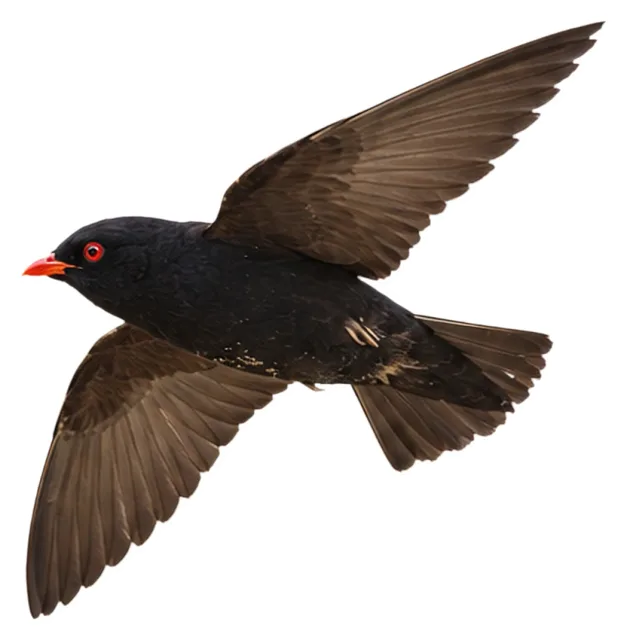
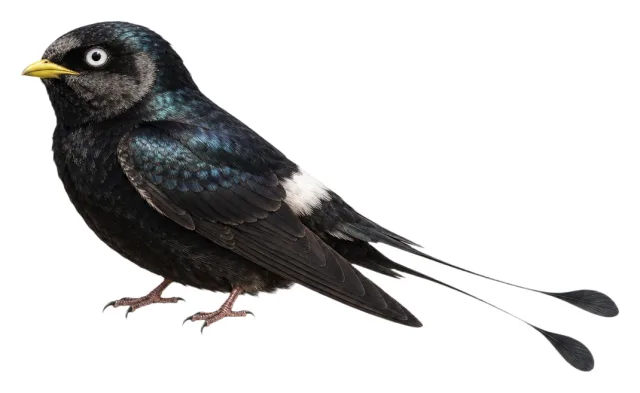
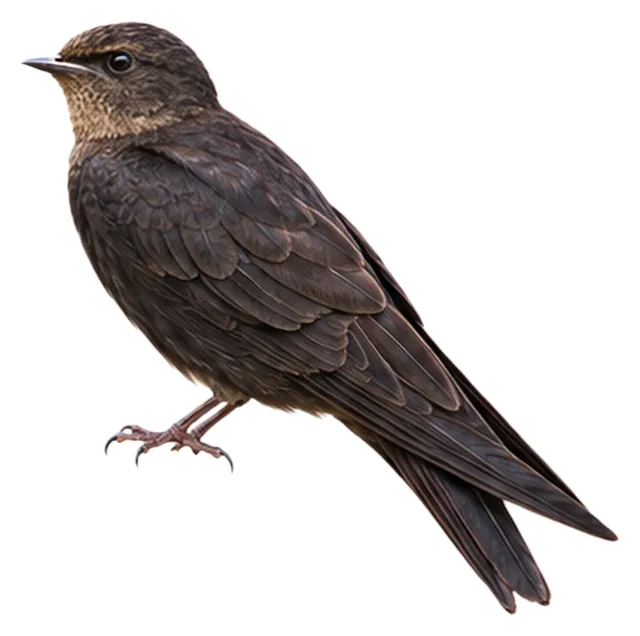
Combine glossy dark upperparts, a reddish throat and long tail streamers; juveniles have shorter tails.
Similar species
Species-specific comparison notes are not yet available. Related birds below are not necessarily lookalikes.
Calls & songs
Marie-Lan Taÿ Pamart · Sources & credits
🌍 Range & Habitat
8 · Subspecies & regional ranges
- Hirundo rustica rustica
Europe, w, c Asia and n Africa
- Hirundo rustica savignii
Egypt
- Hirundo rustica transitiva
Lebanon, Syria, Israel and Jordan
- Hirundo rustica tytleri
sc Siberia
- Hirundo rustica gutturalis
e Himalayas to Korean Pen. and Japan, e, s China and Taiwan
- Hirundo rustica saturata
e Siberia
- Hirundo rustica mandschurica
ne China
- Hirundo rustica erythrogaster
Alaska, Canada and the USA to s Mexico
Frequently asked questions
What is its scientific name?
Hirundo rustica
Which family does it belong to?
Swallows, Martins (Hirundinidae)
Where is it found?
Worldwide: Eurasia and North America
Sources & credits
📖 Open Full Article on Wikipedia- IOC World Bird List 15.2 ↗
- AVONET ↗
- Body length: Wikipedia ↗
- Bird illustration credits ↗ · huashu-bird-sticker · PolyForm-Shield-1.0.0
- Illustration reference ↗ · Andreas Trepte · CC BY-SA 2.5
Field identification notes
Barn Swallow or House Martin? Compare the throat, tail and rump.
- Identification
- Combine glossy dark upperparts, a reddish throat and long tail streamers; juveniles have shorter tails.
- Where to look
- Watch aerial feeding over open country and water; use local records for migration timing.
- Comparison points
- Against House Martin, check for its contrasting white rump; aerial insect hunting alone is not diagnostic.
- Observation tip
- Follow several passes to compare rump, throat and tail, rather than relying on one blurred image.
Compare another species: Western House Martin
Source checked 2026-11-02: RSPB · Barn Swallow. Regional observations in the source are not global population assessments.