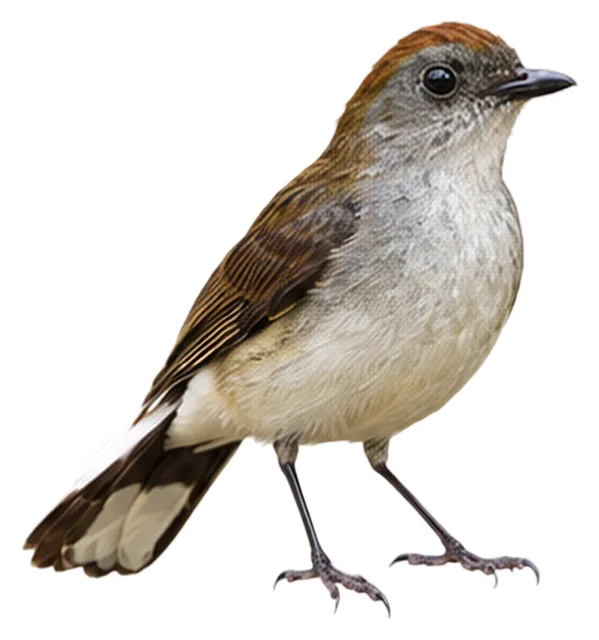
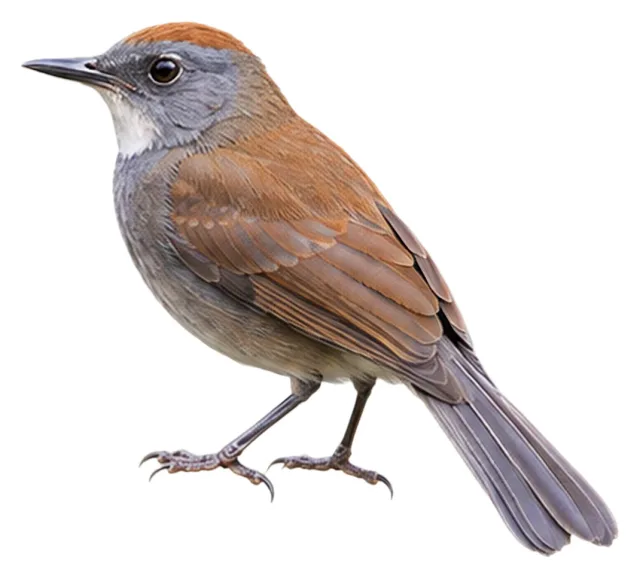
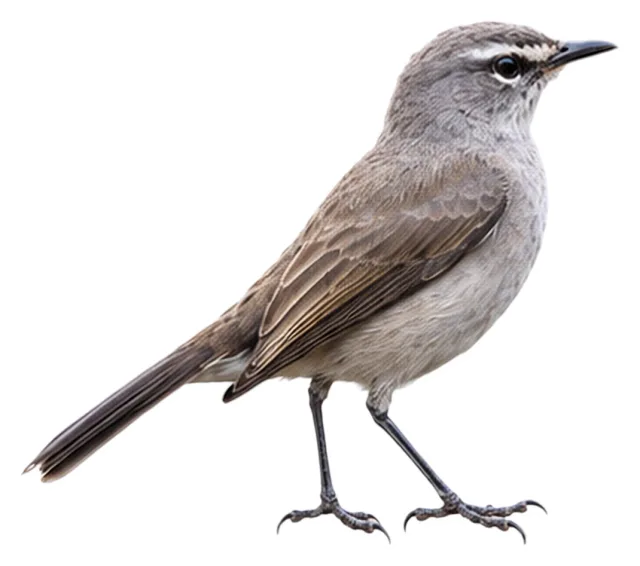
European Robin
European Robin · BirdGacha
European Robin
Erithacus rubeculaAn orange-breasted garden companion, often following gardeners as they turn the soil.
9104 / 11068
Illustration · not to scale
- Body length
- 12.5–14 cm
- Body Mass
- 17.7 g
- Wingspan
- 21 cm
- Diet
- Omnivorous
- Migration
- Migratory
⚔️ Ecological Combat Rationale
Ecomorphologically adapted beak and agile strike momentum tailored to its foraging competition niche (ATK 58).
Lightweight agility and protective plumage camouflage favoring rapid evasive maneuverability over raw armor (DEF 42).
* These descriptions interpret game abilities, not measured physical strength. Generated scores use body mass, rarity and balancing rules; legacy cards retain manual values.
How to identify
Adults have the familiar orange-red breast; juveniles lack it and have spotted brown plumage.
Similar species
Species-specific comparison notes are not yet available. Related birds below are not necessarily lookalikes.
Calls & songs
Pietro Maiorana · Sources & credits
🌍 Range & Habitat
9 · Subspecies & regional ranges
- Erithacus rubecula melophilus
British Isles
- Erithacus rubecula rubecula
Azores, Madeira and w Canary Is. (n to c Macaronesia, nw of n Africa), continental Europe to Ural Mts., w Turkey and nw Morocco
- Erithacus rubecula superbus
Tenerife (c Canary Is., c Macaronesia, nw of n Africa)
- Erithacus rubecula marionae
Gran Canaria (c Canary Is., c Macaronesia, nw of n Africa)
- Erithacus rubecula witherbyi
n Algeria and n Tunisia
- Erithacus rubecula valens
s Crimean Pen. (s Ukraine)
- Erithacus rubecula caucasicus
e Turkey and the Caucasus
- Erithacus rubecula hyrcanus
se Azerbaijan and n Iran
- Erithacus rubecula tataricus
Ural Mts. and sw Siberia
Frequently asked questions
What is its scientific name?
Erithacus rubecula
Which family does it belong to?
Chats, Old World Flycatchers (Muscicapidae)
Where is it found?
Palearctic: Western & Central
Sources & credits
📖 Open Full Article on Wikipedia- IOC World Bird List 15.2 ↗
- AVONET ↗
- Body length: Wikipedia ↗
- Bird illustration credits ↗ · huashu-bird-sticker · PolyForm-Shield-1.0.0
- Illustration reference ↗ · Philip Mark Osso · CC BY-NC
Field identification notes
European Robin field notes: the adult breast, spotted juveniles and territorial behaviour.
- Identification
- Adults have the familiar orange-red breast; juveniles lack it and have spotted brown plumage.
- Where to look
- The guide records woodland, park and garden birds, sometimes following disturbed soil.
- Comparison points
- The sexes look alike. Do not use breast colour alone to sex a bird; consider juvenile plumage first.
- Observation tip
- Note song posts and responses to intruders; the species can defend territories vigorously.
Source checked 2026-11-02: RSPB · European Robin. Regional observations in the source are not global population assessments.