BIRDGACHA / FIELD NOTES
New Zealand Wrens
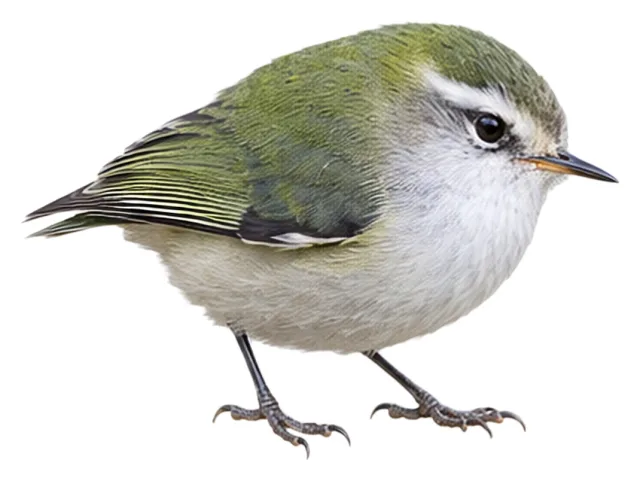
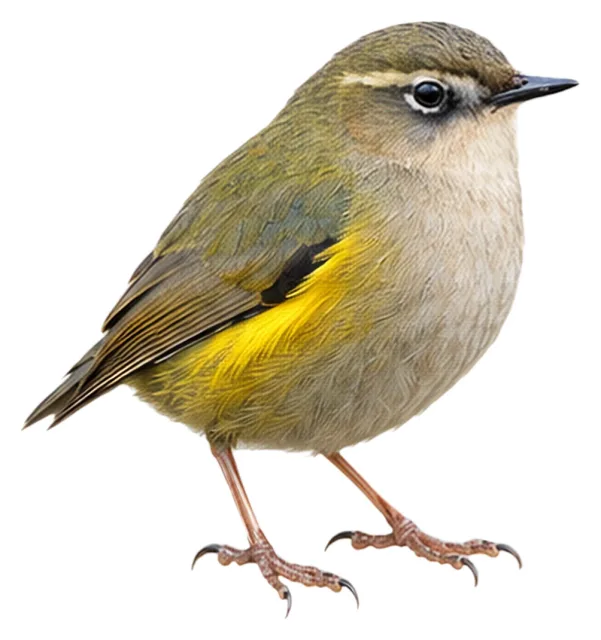
These very small birds have short rounded wings, fine pointed bills and unusually short tails. Their compact outline is quite different from the long-tailed silhouette suggested by many familiar northern wrens. The two species in this catalogue are Rifleman (Acanthisitta chloris) and New Zealand Rockwren (Xenicus gilviventris). They search vegetation, bark or rocks for small invertebrates using quick, close-range movements. Watch the tail and the angle of the bill as a bird pauses. Rifleman and the alpine rockwren both keep the tail short in the outline, even when their feeding surfaces differ.
How to recognize New Zealand Wrens
- Look for an extremely short tail behind a compact body.
- Compare the fine bill and the bird's low, active stance.
- Use forest versus alpine habitat to narrow the two surviving species.
Where they live
The family occurs in New Zealand, where the surviving species occupy forest and alpine environments. Rifleman uses native forest and wooded habitats, while the surviving rockwren is associated with alpine scrub and broken rocky ground. These contrasting environments are important clues when considering the two species. A forest sighting and an alpine scree sighting should therefore be evaluated separately, rather than assigned one shared habitat.
Species accounts: Rifleman · New Zealand Rockwren
Sources — natural history: New Zealand Birds Online: Rifleman and related wrens · Cornell Birds of the World: Rifleman (Acanthisitta chloris), species natural history.
Classification: IOC World Bird List: family names and classification.
Some Cornell Birds of the World account sections require a subscription.
Updated 2026-11-06. Species counts follow this site's catalogue. This is an editorial summary, not an expert peer review.
Species records retain their original English, Chinese and scientific names.
2 results · page 1 of 1