BIRDGACHA / FIELD NOTES
Anhingas, Darters
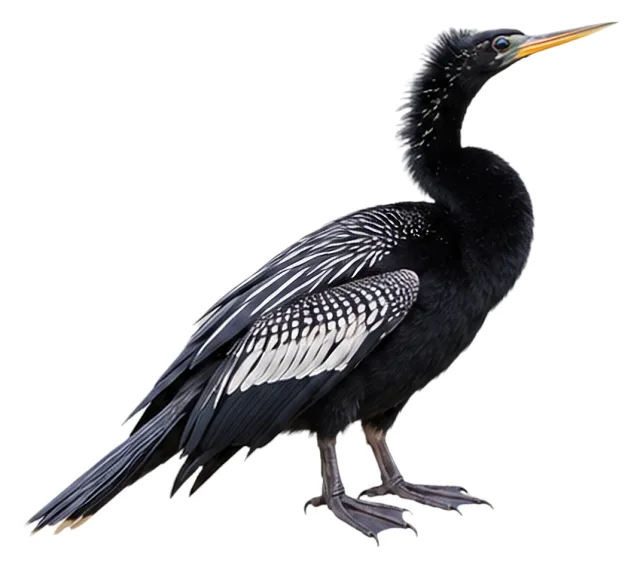
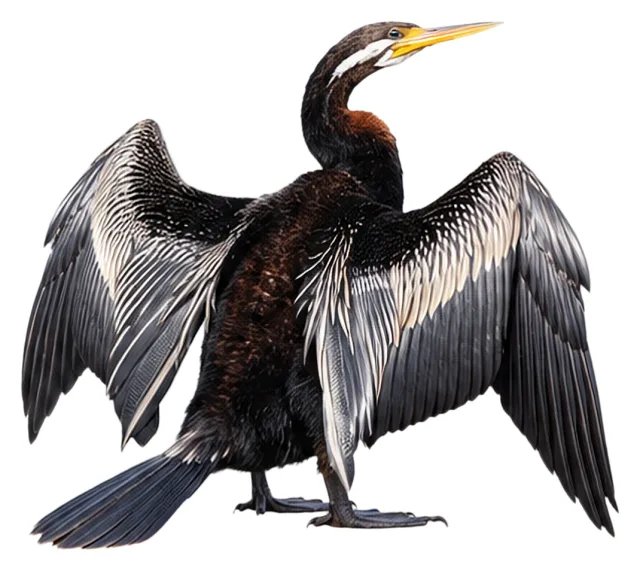
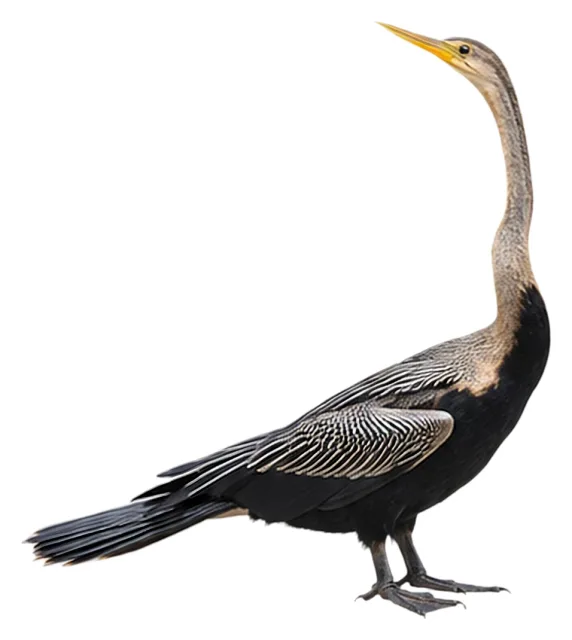
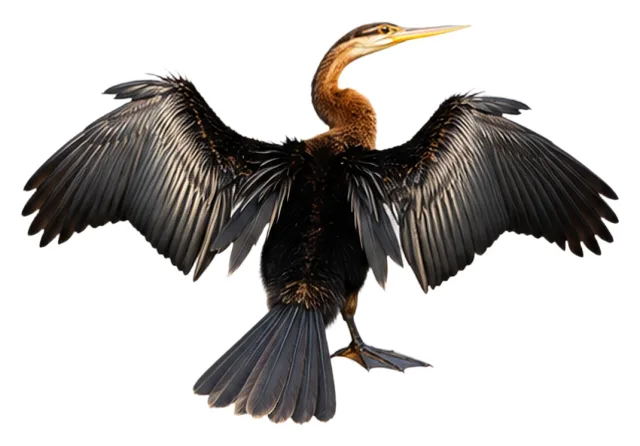
Darters are slender waterbirds with very long necks, elongated tails and straight, sharply pointed bills. A swimming bird may expose little more than its neck and head, producing a distinctive outline quite unlike a typical duck. Examples include Anhinga (Anhinga anhinga), Australasian Darter (Anhinga novaehollandiae), and Oriental Darter (Anhinga melanogaster). Fish are caught underwater, and resting birds often hold their wings open on a waterside perch. The long pointed bill and slender neck form a spear-like profile as a darter swims with its body low.
How to recognize Anhingas, Darters
- Compare the long, thin neck with the small head and straight bill.
- Look for a long tail when a bird leaves the water.
- Watch for spread-wing resting on branches, stumps or posts.
Where they live
The family occurs in warm regions of the Americas, Africa, Asia and Australasia. Lakes, slow rivers, swamps and sheltered lagoons provide feeding water, while branches, stumps or posts offer places to rest. Smooth open water and accessible perches frequently occur together at suitable sites for these birds. A distant neck above the surface may reveal much less than the same bird perched beside the water.
Species accounts: Anhinga · Australasian Darter · Oriental Darter
Sources — natural history: New Zealand Birds Online: darters · Cornell Birds of the World: Australasian Darter (Anhinga novaehollandiae), species natural history.
Classification: IOC World Bird List: family names and classification.
Some Cornell Birds of the World account sections require a subscription.
Updated 2026-11-06. Species counts follow this site's catalogue. This is an editorial summary, not an expert peer review.
Species records retain their original English, Chinese and scientific names.
4 results · page 1 of 1