BIRDGACHA / FIELD NOTES
Kiwis
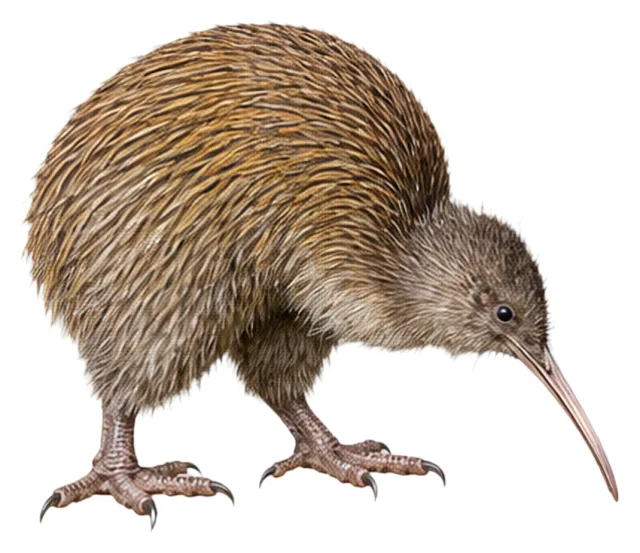
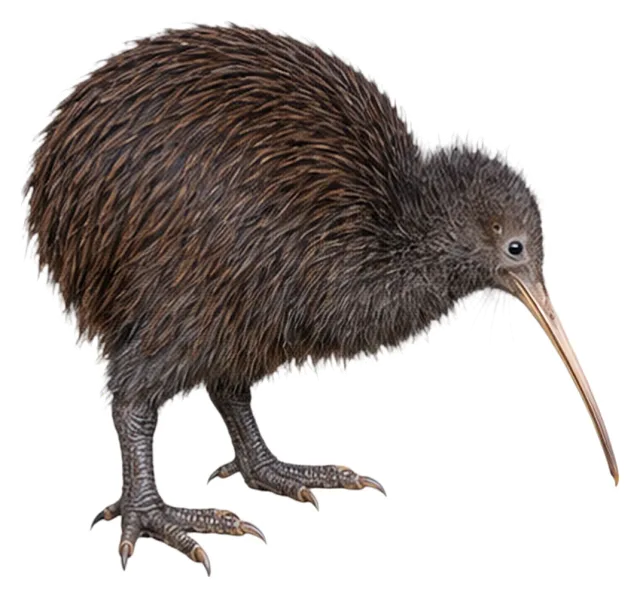
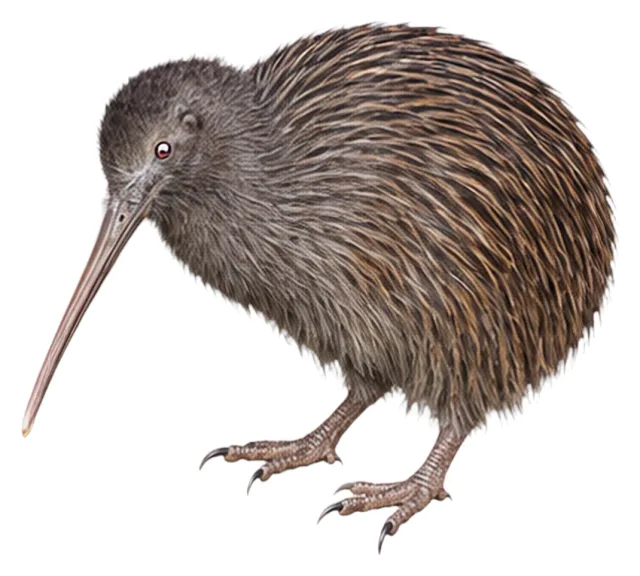
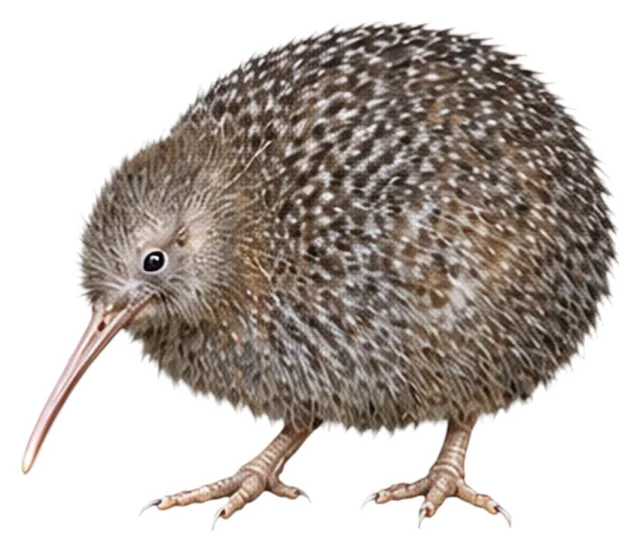
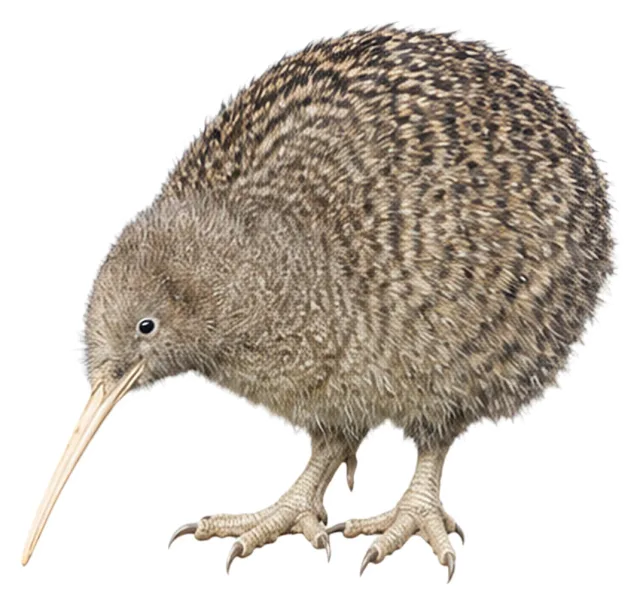
Kiwi are flightless birds with rounded bodies, strong legs, inconspicuous wings and loose feathers resembling coarse hair. Their exceptionally long bills have nostrils near the tip, while the absence of an obvious external tail accentuates the rounded outline. Examples include Southern Brown Kiwi (Apteryx australis), North Island Brown Kiwi (Apteryx mantelli), and Okarito Kiwi (Apteryx rowi). They probe soil and leaf litter for invertebrates, using a highly developed sense of smell. Listen from a suitable distance rather than approaching or illuminating a calling bird.
How to recognize Kiwis
- Look for a rounded, tailless outline above stout legs.
- Compare bill length and feather pattern using a clear side view.
- Check the island and locality before choosing between kiwi species.
Where they live
The family occurs in New Zealand, including protected mainland sites and offshore islands. Native forest, regenerating scrub and some grassland or alpine environments support different kiwi populations. Ground cover, accessible soil and safe daytime shelters matter, and predator management strongly influences where populations can persist. Most activity is nocturnal, although some populations regularly forage during daylight; behaviour alone does not determine the species.
Species accounts: Southern Brown Kiwi · North Island Brown Kiwi · Okarito Kiwi
Sources — natural history: New Zealand Department of Conservation: kiwi · Cornell Birds of the World: Southern Brown Kiwi (Apteryx australis), species natural history.
Classification: IOC World Bird List: family names and classification.
Some Cornell Birds of the World account sections require a subscription.
Updated 2026-11-06. Species counts follow this site's catalogue. This is an editorial summary, not an expert peer review.
Species records retain their original English, Chinese and scientific names.
5 results · page 1 of 1