BIRDGACHA / FIELD NOTES
Sheathbills
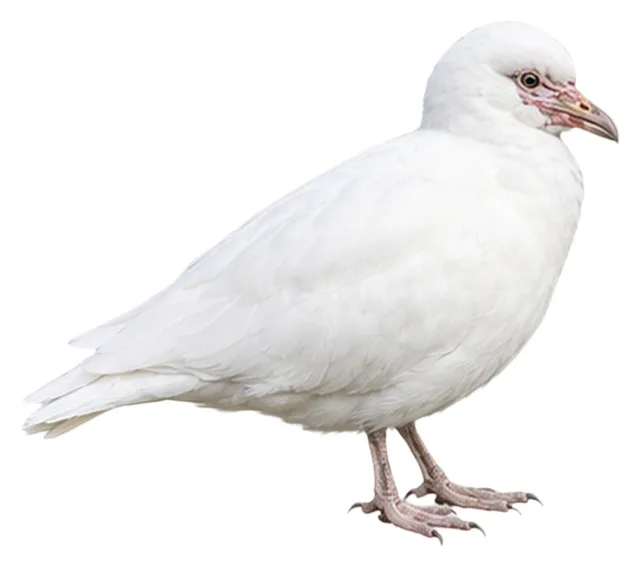
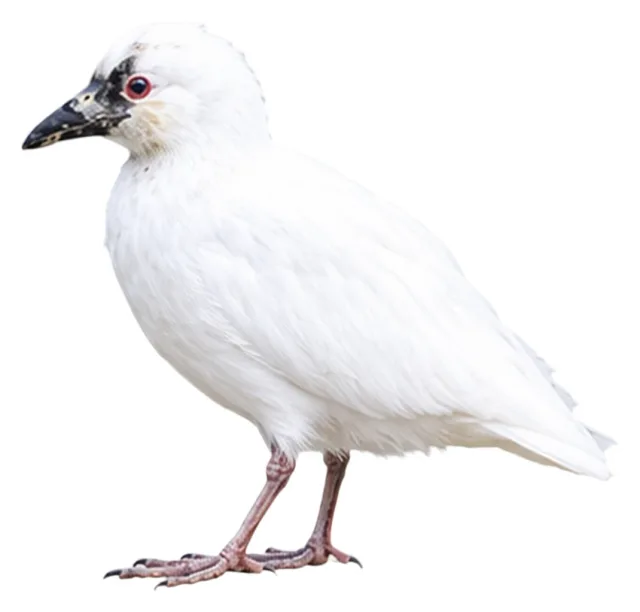
Sheathbills are stocky, mostly white birds with sturdy bills, relatively short legs and unwebbed feet. The bare facial skin and the sheath around the bill differ between the two species, while their walking posture can suggest a pigeon rather than a swimming seabird. The two species in this catalogue are Snowy Sheathbill (Chionis albus) and Black-faced Sheathbill (Chionis minor). They are opportunistic scavengers and feeders, often taking advantage of food around seabird colonies and shorelines. The shape of the bill and the arrangement of bare facial skin distinguish sheathbills against their shared white plumage.
How to recognize Sheathbills
- Look for a stocky white body walking on unwebbed feet.
- Compare the bill sheath and the colour of bare facial skin.
- Check the island or Antarctic locality before choosing between species.
Where they live
The family occurs in Antarctic and subantarctic coasts and islands in the Southern Hemisphere. Rocky coasts, beaches and areas around penguin or other seabird colonies provide feeding opportunities. Although closely associated with the Southern Ocean, sheathbills mainly forage on land and along the shore rather than pursuing prey underwater. The two species have different island and coastal distributions, so the exact location is as important as a close view of the face.
Species accounts: Snowy Sheathbill · Black-faced Sheathbill
Sources — natural history: Wikipedia: Sheathbills · Cornell Birds of the World: Snowy Sheathbill (Chionis albus), species natural history.
Classification: IOC World Bird List: family names and classification.
Some Cornell Birds of the World account sections require a subscription.
Updated 2026-11-06. Species counts follow this site's catalogue. This is an editorial summary, not an expert peer review.
Species records retain their original English, Chinese and scientific names.
2 results · page 1 of 1