BIRDGACHA / FIELD NOTES
Bristlebirds
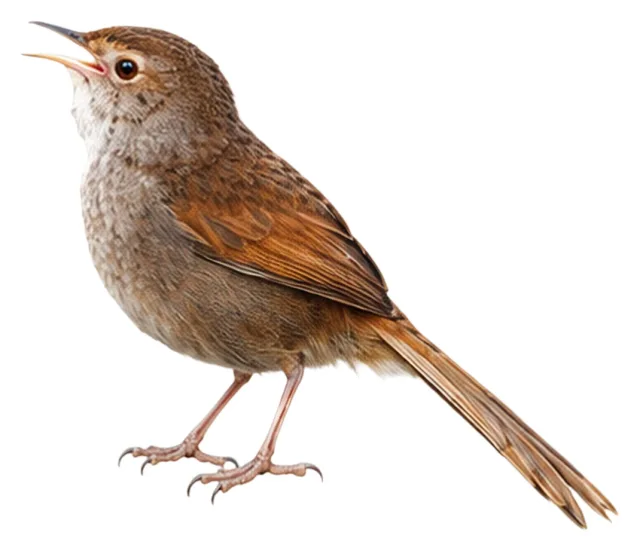
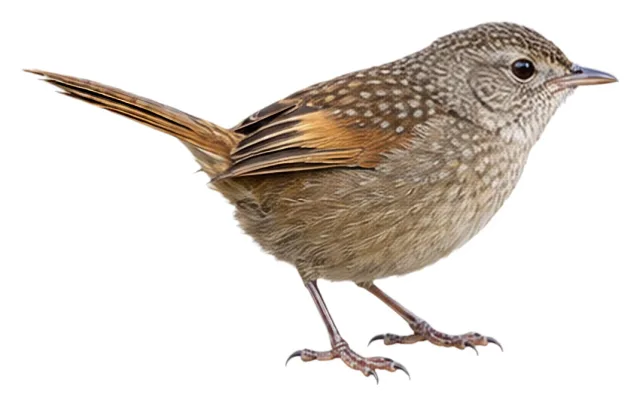
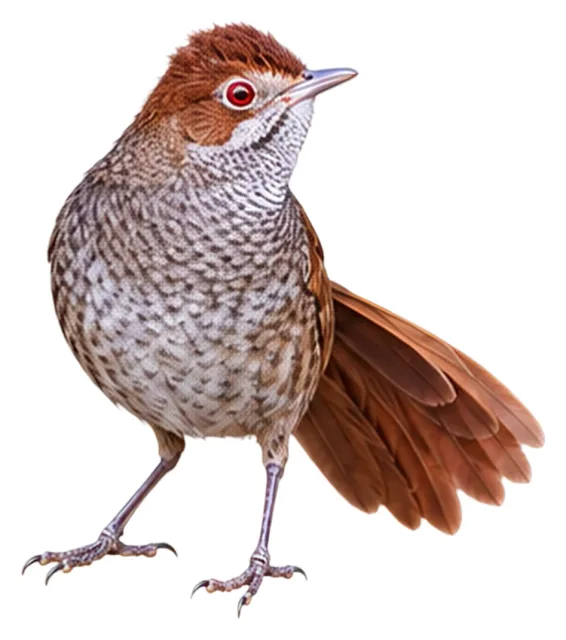
Bristlebirds are secretive, brownish songbirds with relatively long tails, short wings and fine bristles around the bill. Their subdued plumage blends with dense ground vegetation, while differences in head colour, spotting and body proportions can be difficult to see in a brief encounter. Examples include Eastern Bristlebird (Dasyornis brachypterus), Western Bristlebird (Dasyornis longirostris), and Rufous Bristlebird (Dasyornis broadbenti). They search low vegetation and litter for small invertebrates, often revealing their presence through carrying songs rather than exposed movements. Wait near an existing path after hearing a bird instead of entering the thick cover it depends on.
How to recognize Bristlebirds
- Look for a long tail and short-winged movement low in cover.
- Compare head colour and the amount of spotting on the underparts.
- Use song, dense vegetation structure and the exact Australian region.
Where they live
The family occurs in southern and eastern Australia, including southwestern coastal districts. Heathland, coastal thickets and dense grassy or shrubby understorey provide important habitat. Vegetation structure is central, but the three species occupy different Australian regions, and suitable fire history helps determine whether dense protective cover remains available. Regional separation is useful: eastern, western and rufous bristlebirds should not be assumed to occur together at one site.
Species accounts: Eastern Bristlebird · Western Bristlebird · Rufous Bristlebird
Sources — natural history: Australian Government: Eastern Bristlebird habitat and recovery · Cornell Birds of the World: Eastern Bristlebird (Dasyornis brachypterus), species natural history.
Classification: IOC World Bird List: family names and classification.
Some Cornell Birds of the World account sections require a subscription.
Updated 2026-11-06. Species counts follow this site's catalogue. This is an editorial summary, not an expert peer review.
Species records retain their original English, Chinese and scientific names.
3 results · page 1 of 1