BIRDGACHA / FIELD NOTES
Frigatebirds
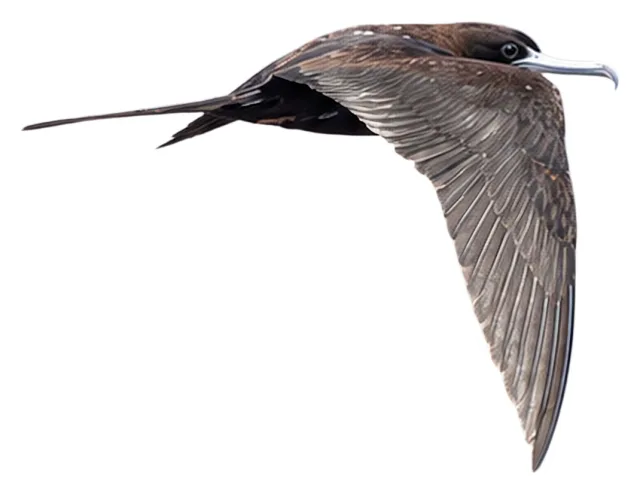
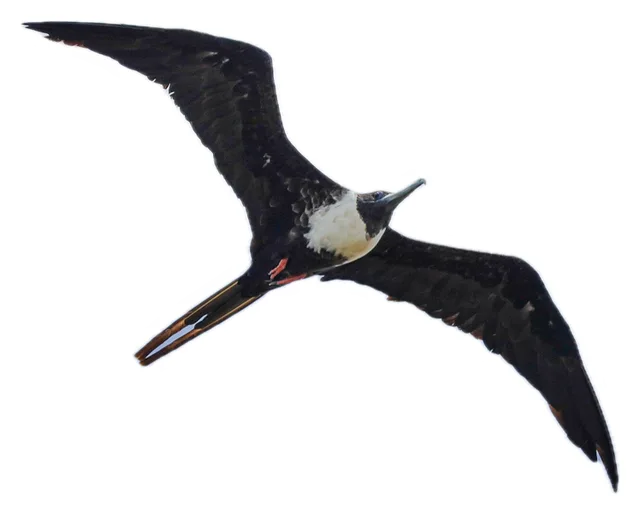
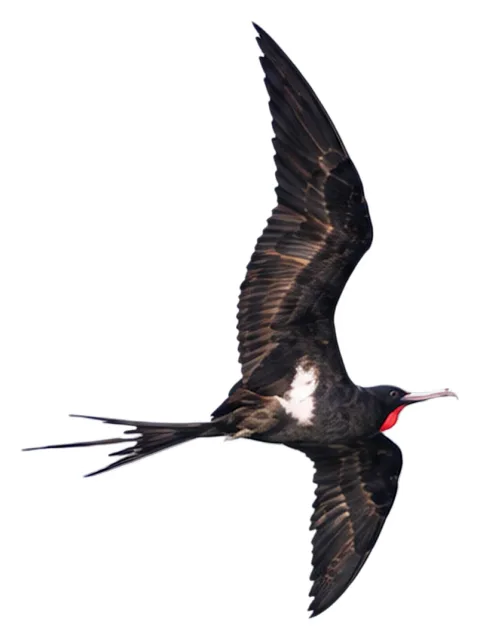
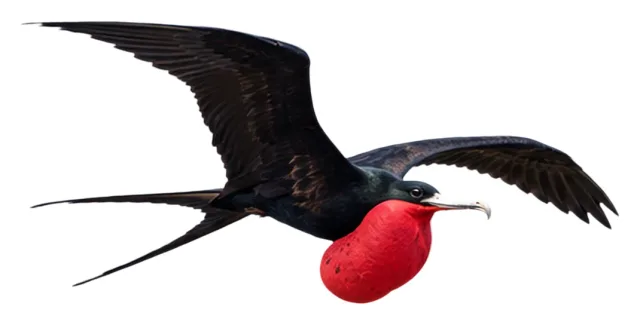
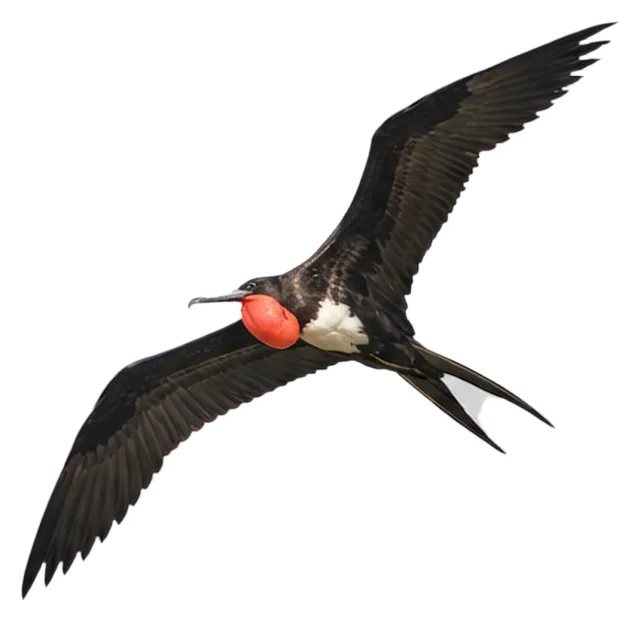
Frigatebirds have exceptionally long, angular wings, deeply forked tails and long bills with hooked tips. Their bodies are relatively small compared with the wingspan, while pale chest or head areas vary with species, age and sex against predominantly dark plumage. Examples include Ascension Frigatebird (Fregata aquila), Magnificent Frigatebird (Fregata magnificens), and Lesser Frigatebird (Fregata ariel). They take marine prey near the surface and sometimes chase other seabirds, but stealing food is only part of their feeding repertoire. Compare the location of pale patches and the shape of the tail over several soaring turns.
How to recognize Frigatebirds
- Look for angular wings far longer than the small body suggests.
- Check the deeply forked tail and long hooked bill.
- Compare pale breast or head patches while allowing for age and sex.
Where they live
The family occurs in tropical and subtropical oceans and their coastal islands. Warm marine waters provide feeding areas, while islands with suitable trees, shrubs or other colony sites support breeding. Birds are highly aerial and may range far from a colony, so a coastal sighting does not necessarily indicate nearby nesting. The red inflatable throat pouch is most obvious on displaying adult males; its absence does not rule out a frigatebird.
Species accounts: Ascension Frigatebird · Magnificent Frigatebird · Lesser Frigatebird
Sources — natural history: Wikipedia: Frigatebirds · Cornell Birds of the World: Ascension Frigatebird (Fregata aquila), species natural history.
Classification: IOC World Bird List: family names and classification.
Some Cornell Birds of the World account sections require a subscription.
Updated 2026-11-06. Species counts follow this site's catalogue. This is an editorial summary, not an expert peer review.
Species records retain their original English, Chinese and scientific names.
5 results · page 1 of 1