BIRDGACHA / FIELD NOTES
Mitrospingid Tanagers
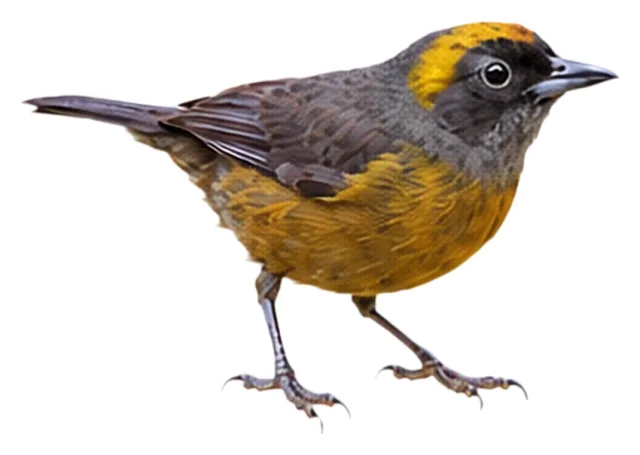
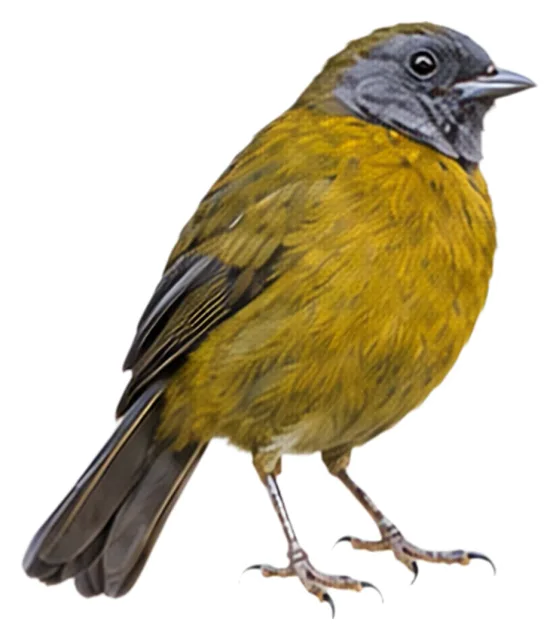
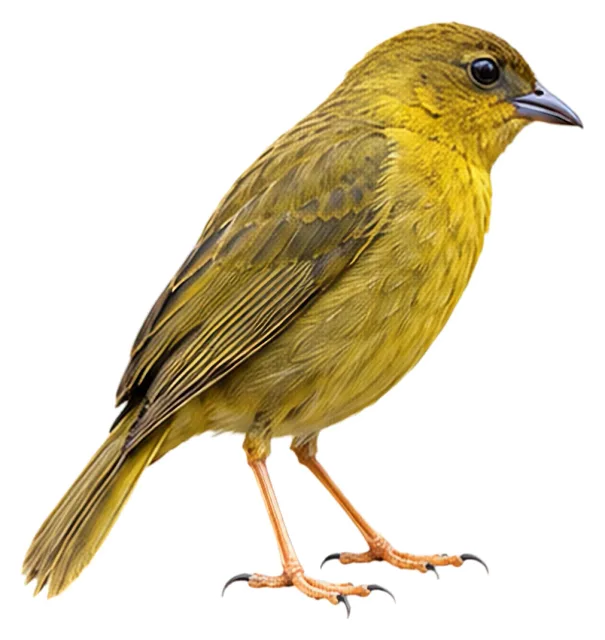
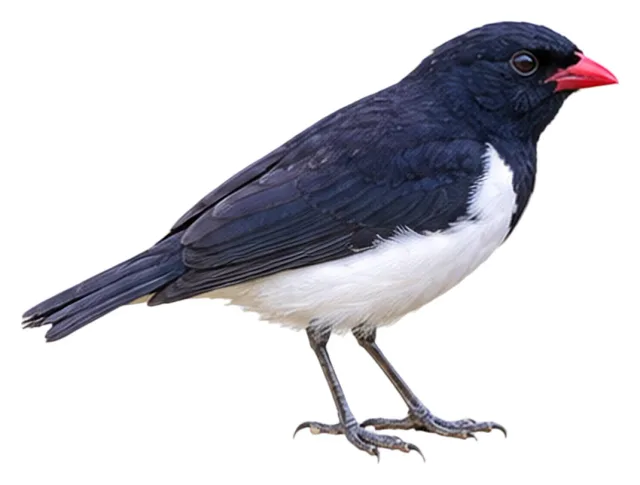
Mitrospingid tanagers are a small American family containing birds once placed with the much larger tanager assemblage. Their relatively substantial bills accompany olive-green, grey or sharply contrasting plumage. Examples include Dusky-faced Tanager (Mitrospingus cassinii), Olive-green Tanager (Orthogonys chloricterus), and Red-billed Pied Tanager (Lamprospiza melanoleuca). They take fruit and invertebrates, with feeding parties occurring in several members. The Red-billed Pied Tanager differs strikingly from the subdued Olive-green Tanager in both bill colour and body pattern. Their shared family placement is therefore more informative about classification than about a single bright colour or an identical feeding appearance.
How to recognize Mitrospingid Tanagers
- Bill: substantial fruit-handling bills.
- Outline: medium-sized bodies with olive or strongly contrasting plumage.
- Feeding: taking fruit and insects in tropical foliage.
Where they live
Tropical American forests support these birds in separate geographic regions. Mitrospingus species use forest edges and secondary vegetation in parts of Central and South America, while the Olive-green Tanager is associated with southeastern Brazil's Atlantic Forest. Fruiting vegetation can draw birds into conspicuous parties. These populations do not share one continuous range, and local forest type is more useful than the broad label of tropical tanager habitat.
Species accounts: Dusky-faced Tanager · Olive-green Tanager · Red-billed Pied Tanager
Sources — natural history: Wikipedia: Mitrospingid Tanagers natural history · Cornell Birds of the World: Dusky-faced Tanager species account · Don Roberson: Mitrospingid Tanagers field observations and natural history.
Classification: IOC World Bird List: family names and classification.
Some Cornell Birds of the World account sections require a subscription.
Updated 2026-11-06. Species counts follow this site's catalogue. This is an editorial summary, not an expert peer review.
Species records retain their original English, Chinese and scientific names.
4 results · page 1 of 1