BIRDGACHA / FIELD NOTES
Potoos
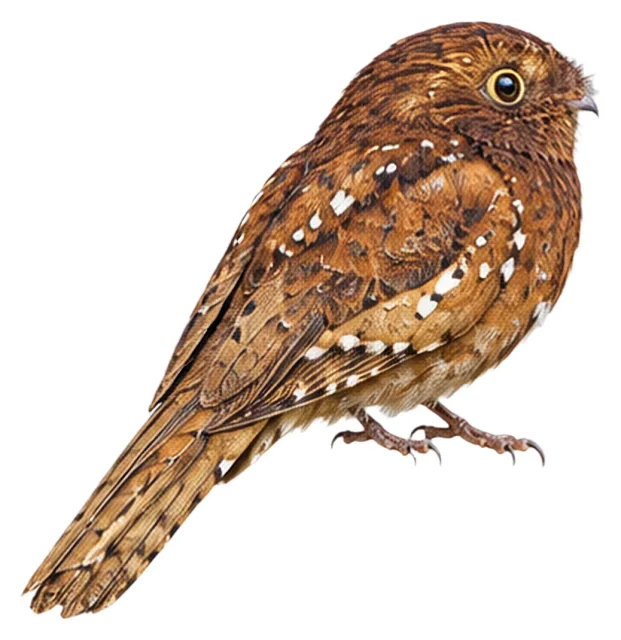
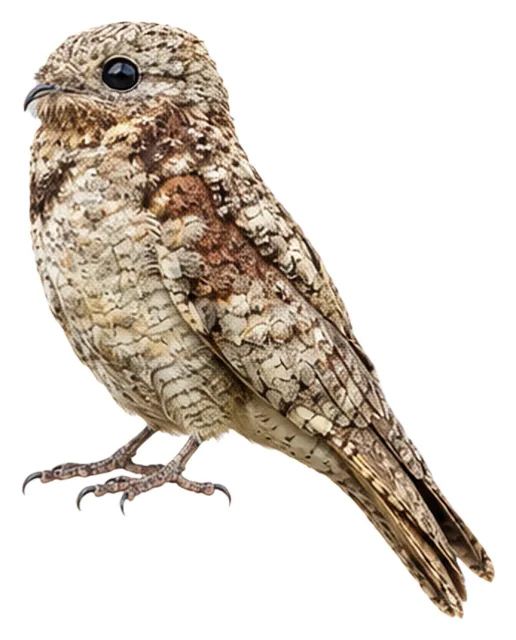
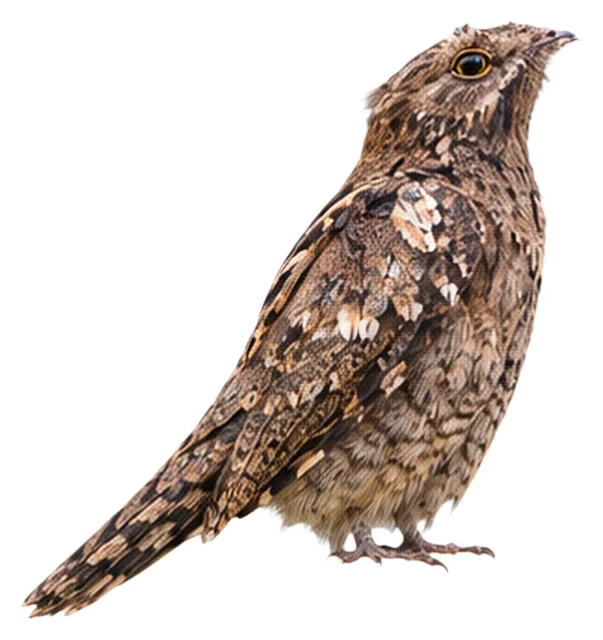
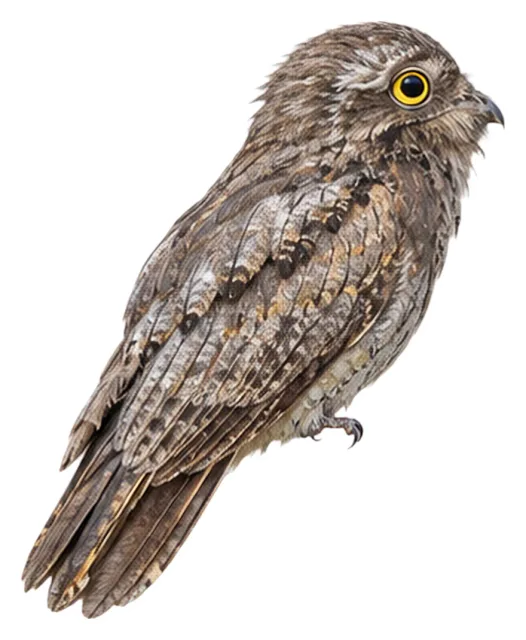
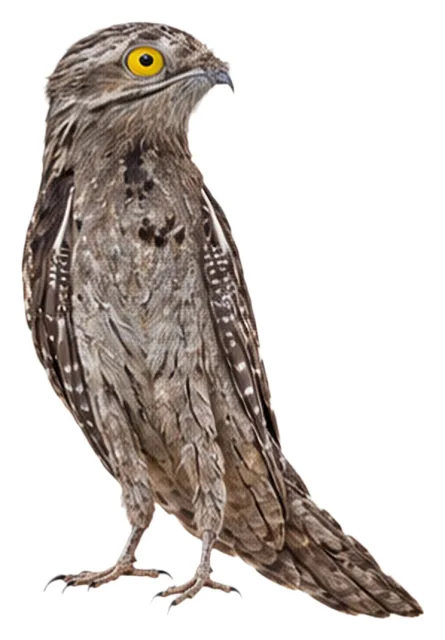
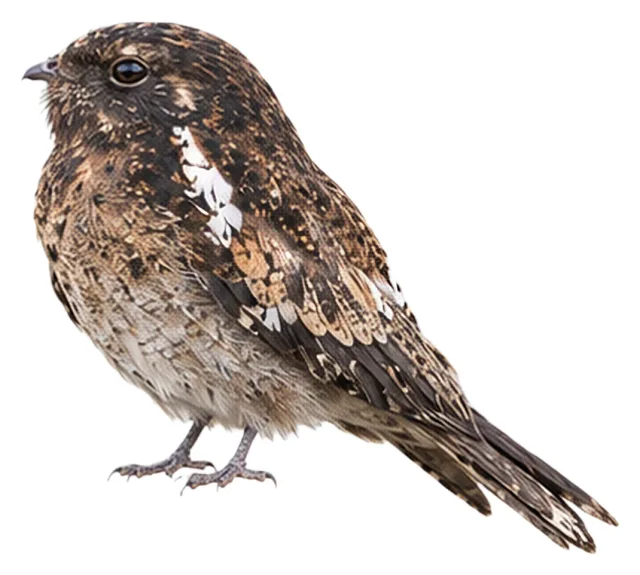
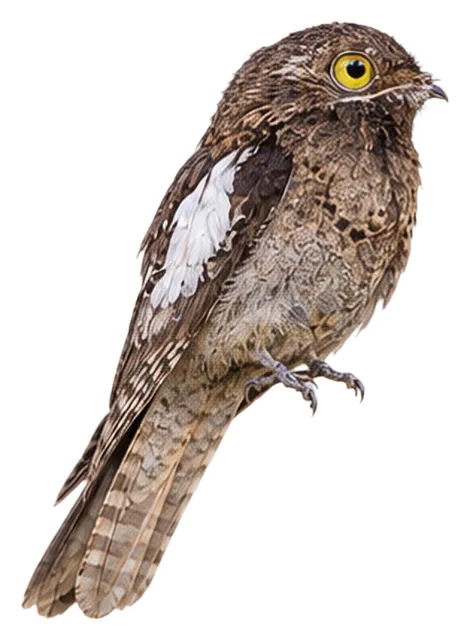
Potoos have large heads and eyes, tiny-looking bills and exceptionally wide mouths. Their mottled brown, grey or rufous plumage can resemble bark, especially when a resting bird holds an upright posture at the end of a branch. Size, tail proportions and colour pattern vary markedly between the large and small members. Examples include Common Potoo (Nyctibius griseus), Great Potoo (Nyctibius grandis), and Rufous Potoo (Phyllaemulor bracteatus). These mainly nocturnal birds watch from perches and fly out to capture insects, returning to a perch between feeding flights. A branch-like resting silhouette and a wide-eyed night view are different appearances of the same cryptically patterned bird.
How to recognize Potoos
- Look for a very large eye and a tiny visible bill above a broad mouth.
- Compare mottled body pattern, overall size and tail length.
- Recognize the upright branch-like daytime posture from a respectful distance.
- Use the local species' calls alongside the shape of a naturally visible bird.
Where they live
The family occurs in tropical and subtropical parts of the Americas, with species occupying different regional ranges. Forests, wooded edges and other tree-covered landscapes provide feeding perches and daytime resting places. Great Potoos use forest as well as some edge and agricultural settings. Studies of Common Potoos show a strong use of natural tree substrates, with occasional resting birds also recorded on artificial supports. The outline of a broken branch can conceal a resting potoo, while the surrounding openings provide space for its insect-catching flights.
Species accounts: Common Potoo · Great Potoo · Rufous Potoo
Sources — natural history: Animal Diversity Web: Great Potoo structure, habitat and nocturnal feeding · Cestari et al. (2018), FAPESP research abstract: Common Potoo camouflage and perch selection.
Classification: White et al. (2017): potoo family relationships and diversity · IOC World Bird List: family names and classification.
Updated 2026-11-06. Species counts follow this site's catalogue. This is an editorial summary, not an expert peer review.
Species records retain their original English, Chinese and scientific names.
7 results · page 1 of 1