
BIRDGACHA / FIELD NOTES
Bustards
Bustards are substantial ground birds with strong legs, long necks and broad wings. Their size varies enormously, and several large species show pronounced differences between males and females. Examples include Great Bustard (Otis tarda), Arabian Bustard (Ardeotis arabs), and African Houbara (Chlamydotis undulata). They walk across open country taking insects, other small animals and plant material. Male display may involve expanded neck plumage, specialised calls or conspicuous postures. Despite a heavy-looking body, bustards can fly strongly; the smaller floricans and korhaans broaden the family's appearance beyond the giant species most commonly associated with the name.
How to recognize Bustards
- Bill: short substantial bills.
- Outline: heavy bodies with long necks and strong legs.
- Feeding: walking through open country for plant and animal food.
Where they live
Grassland, savanna, steppe and semi-desert across Africa, Eurasia and Australia support different bustards. Many require extensive open landscapes, with vegetation height influencing visibility, feeding and nesting cover. Seasonal rainfall and food availability can trigger movements, while some northern populations migrate. Ground nests and wide-ranging movements make the continuity and management of open habitat important, rather than simply the presence of one small grass-covered patch.
Species accounts: Great Bustard · Arabian Bustard · African Houbara
Sources — natural history: Wikipedia: Bustards natural history · Cornell Birds of the World: Great Bustard species account · Don Roberson: Bustards field observations and natural history.
Classification: IOC World Bird List: family names and classification.
Some Cornell Birds of the World account sections require a subscription.
Updated 2026-11-06. Species counts follow this site's catalogue. This is an editorial summary, not an expert peer review.
Species records retain their original English, Chinese and scientific names.
26 results · page 1 of 1
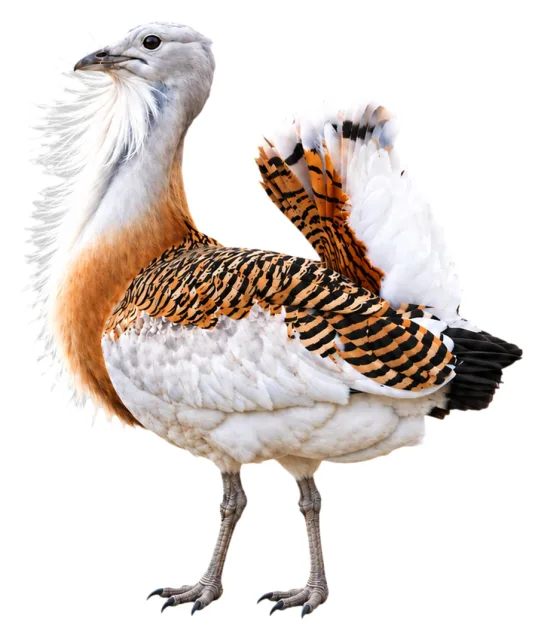 Great BustardOtis tarda
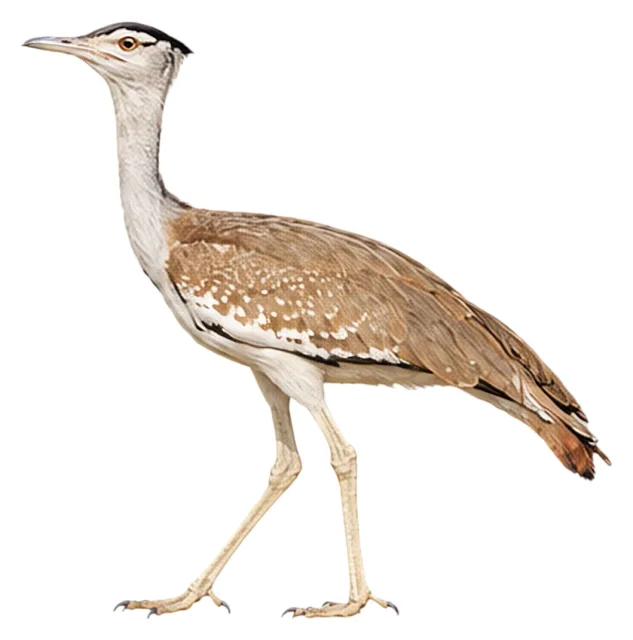 Arabian BustardArdeotis arabs
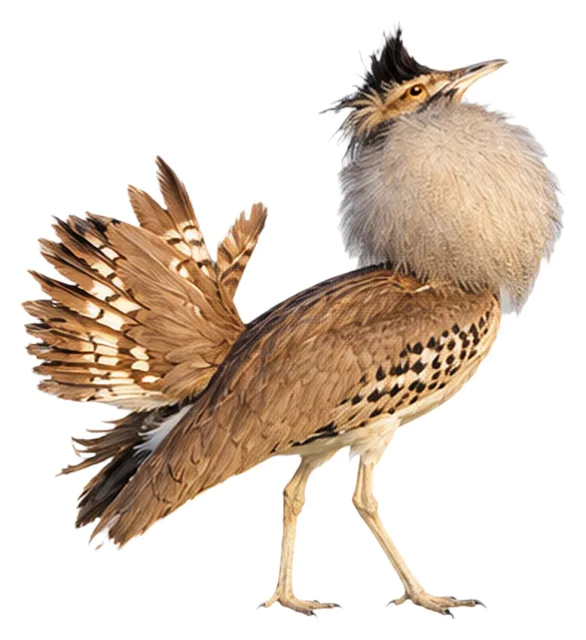 Kori BustardArdeotis kori
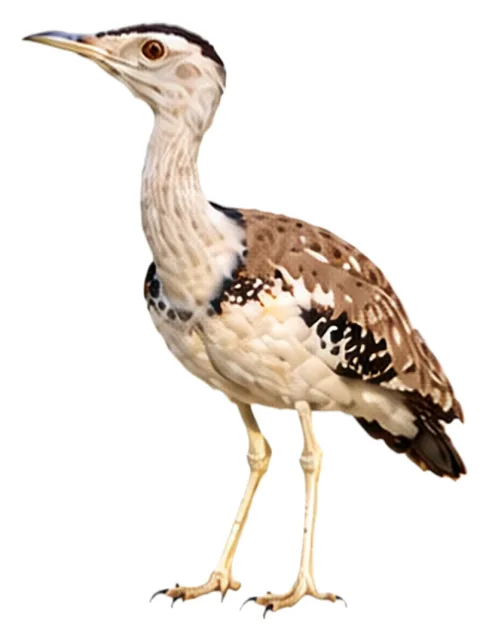 Great Indian BustardArdeotis nigriceps
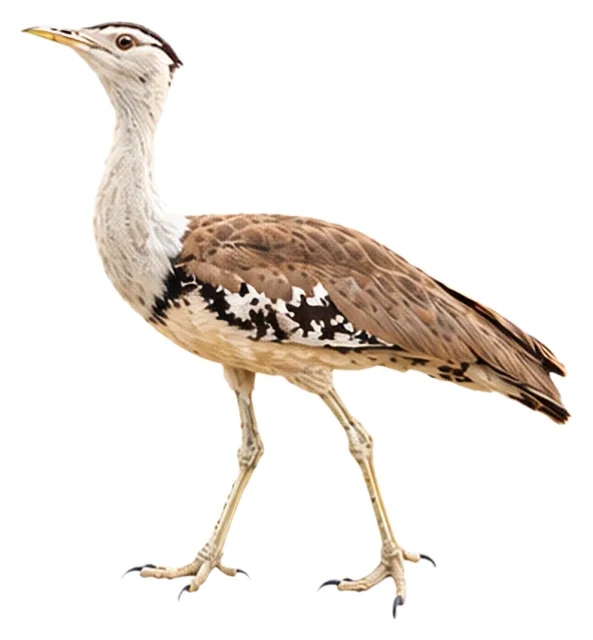 Australian BustardArdeotis australis
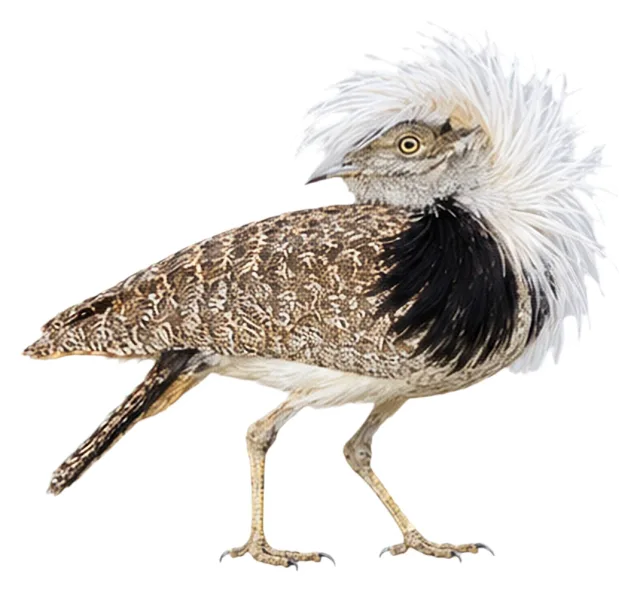 African HoubaraChlamydotis undulata
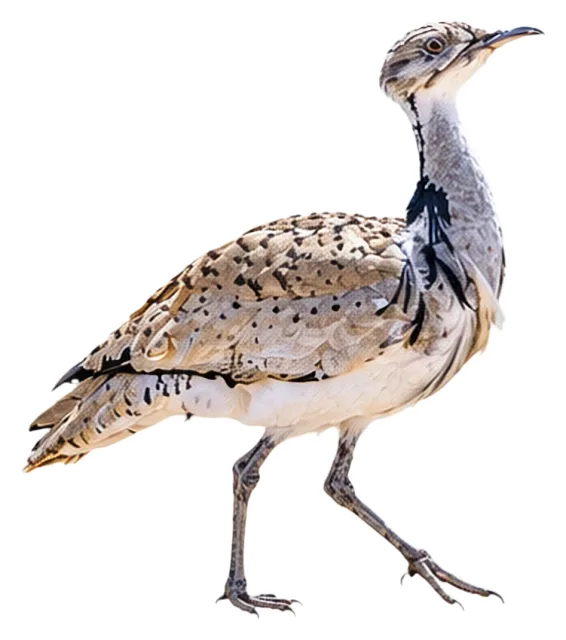 Asian HoubaraChlamydotis macqueenii
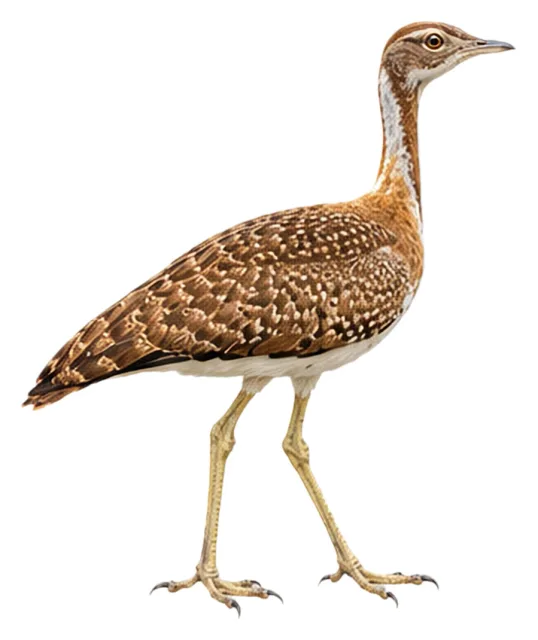 Ludwig's BustardNeotis ludwigii
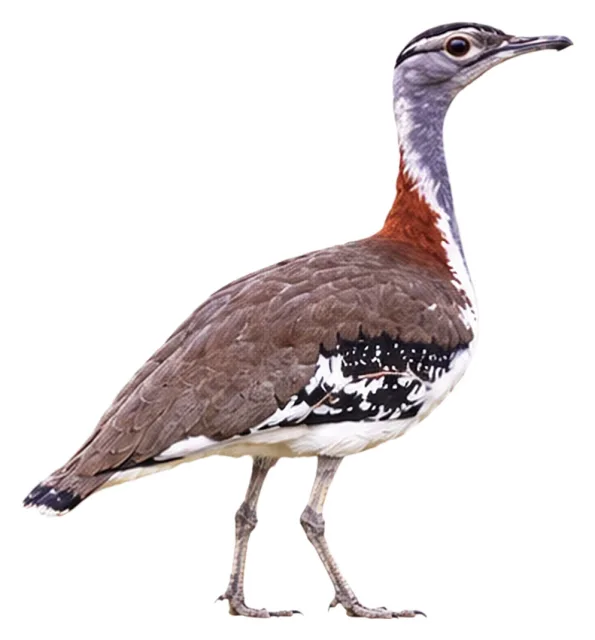 Denham's BustardNeotis denhami
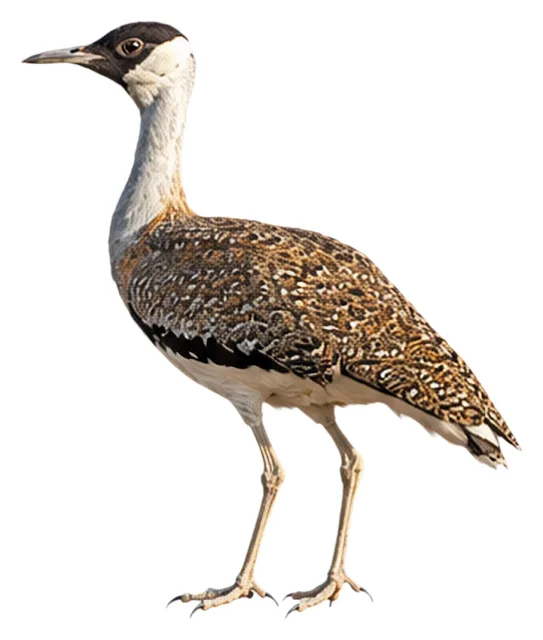 Heuglin's BustardNeotis heuglinii
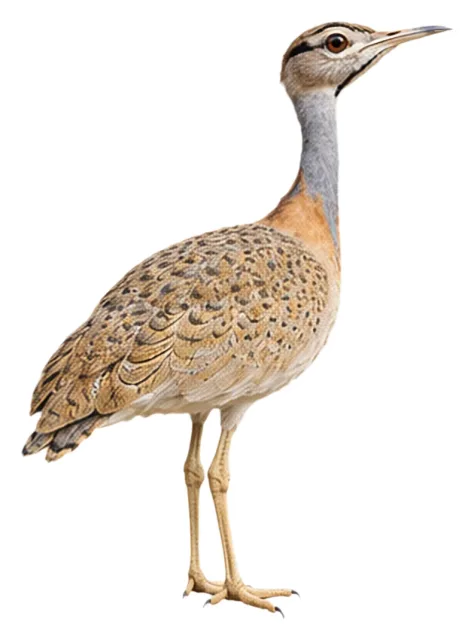 Nubian BustardNeotis nuba
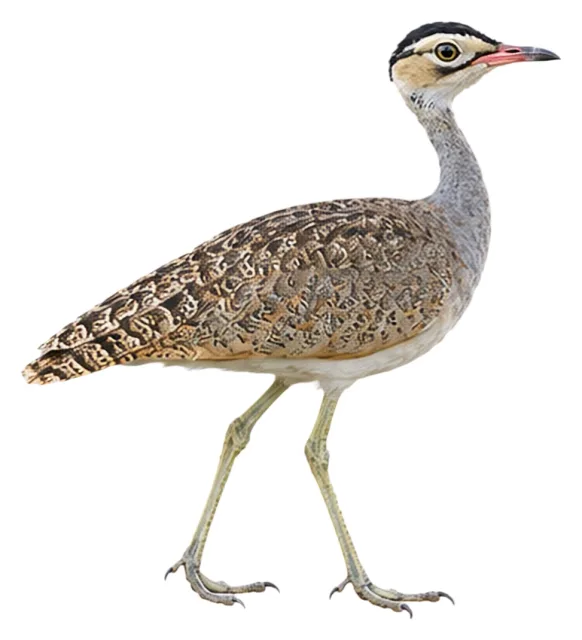 White-bellied BustardEupodotis senegalensis
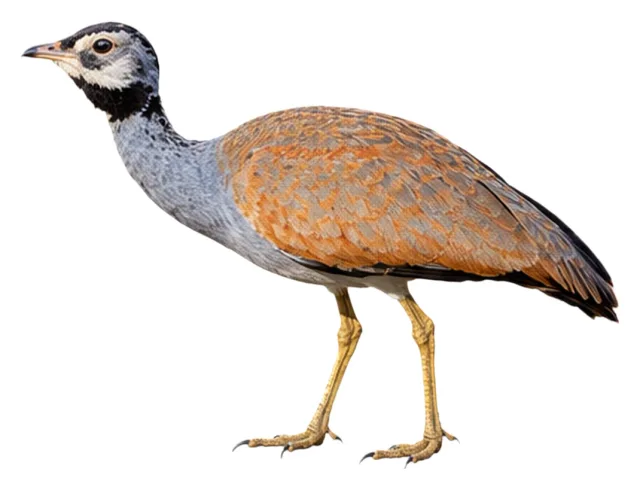 Blue KorhaanEupodotis caerulescens
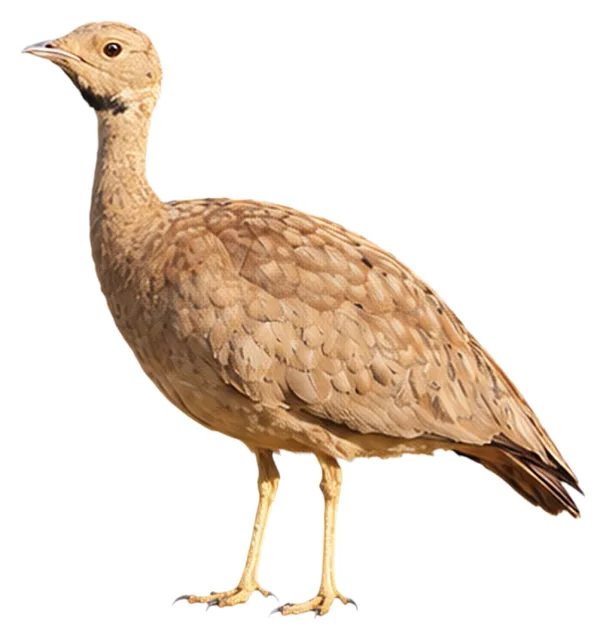 Karoo KorhaanHeterotetrax vigorsii
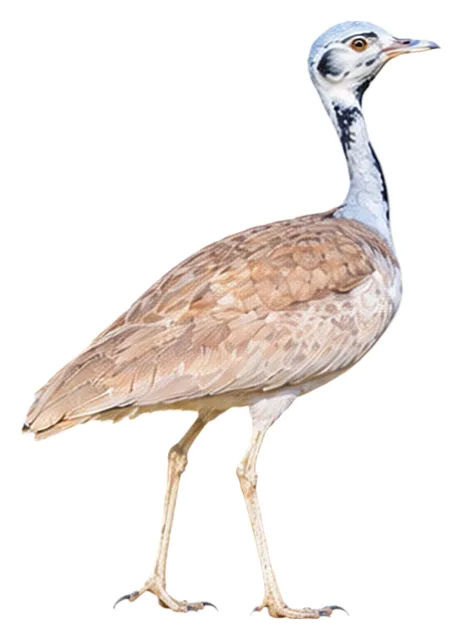 Rüppell's KorhaanHeterotetrax rueppelii
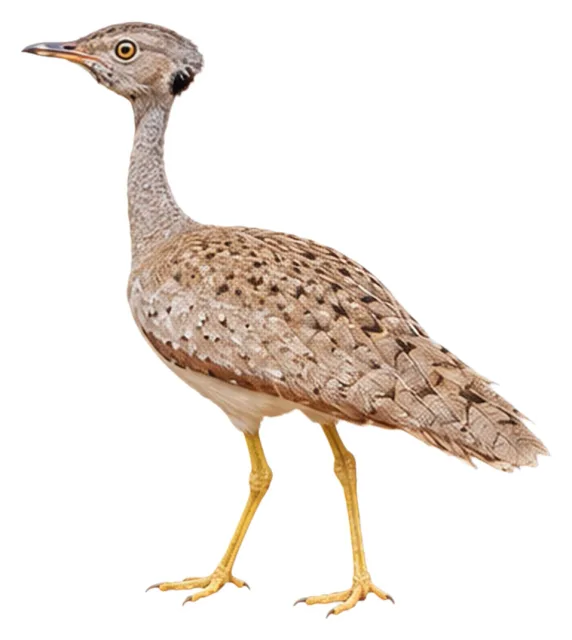 Little Brown BustardHeterotetrax humilis
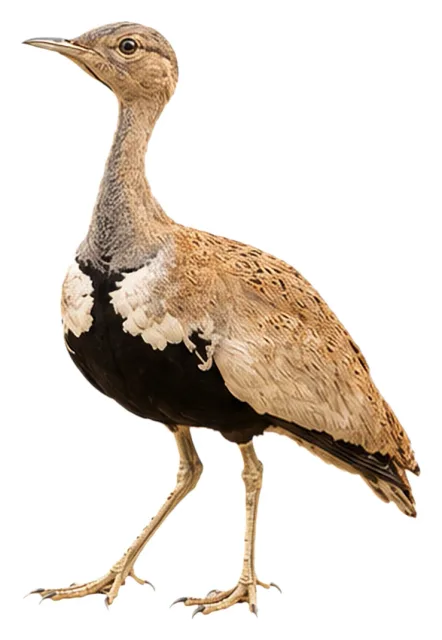 Savile's BustardLophotis savilei
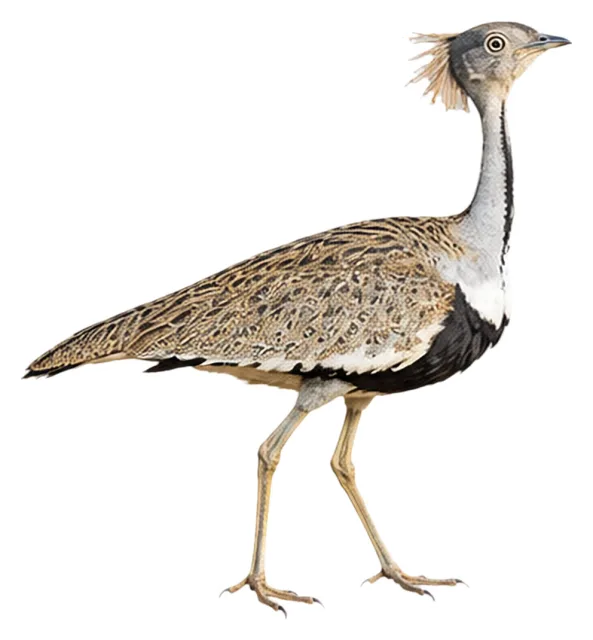 Buff-crested BustardLophotis gindiana
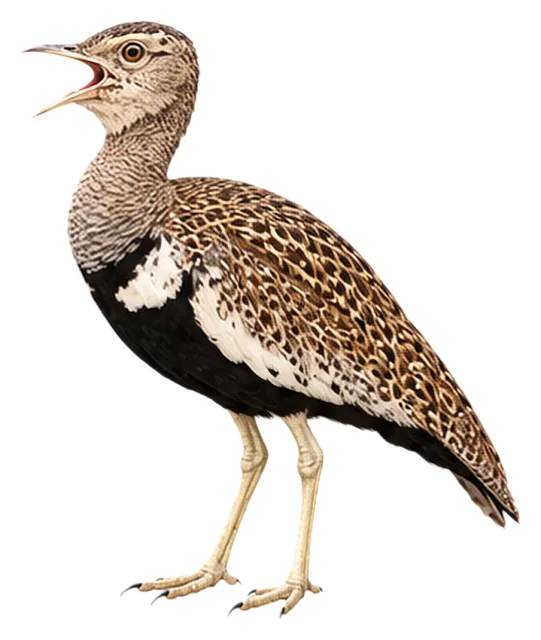 Red-crested KorhaanLophotis ruficrista
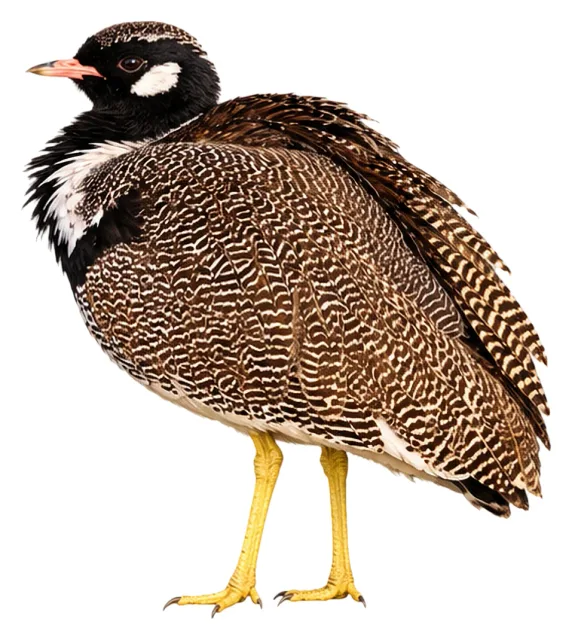 Southern Black KorhaanAfrotis afra
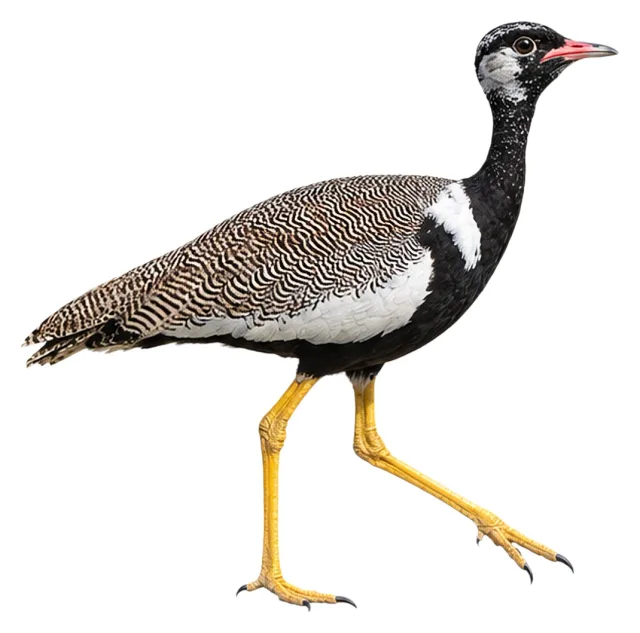 Northern Black KorhaanAfrotis afraoides
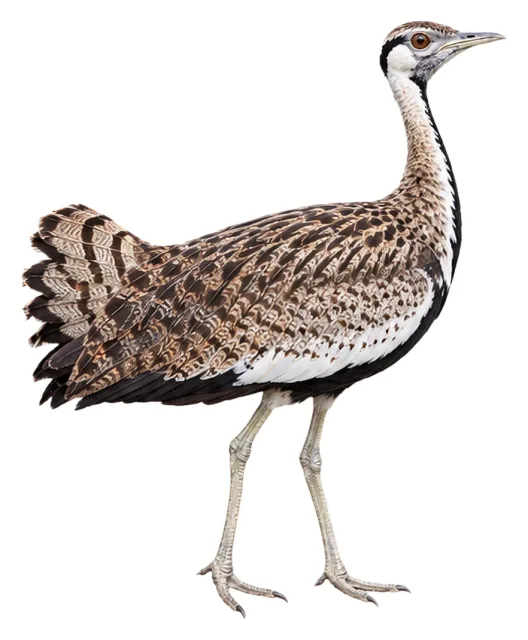 Black-bellied BustardLissotis melanogaster
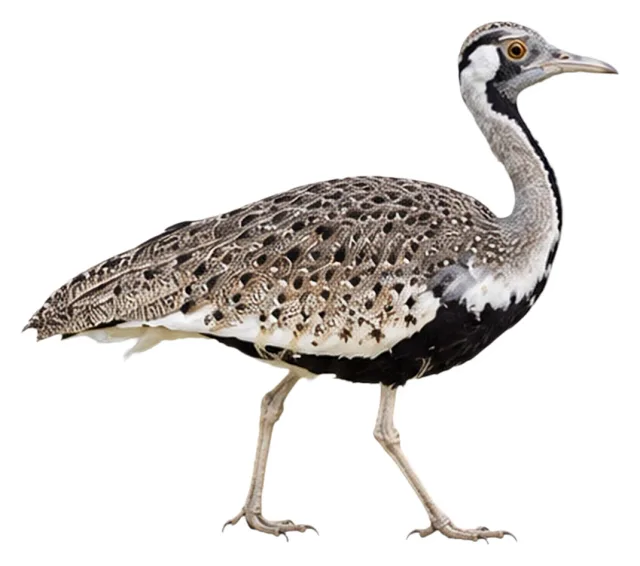 Hartlaub's BustardLissotis hartlaubii
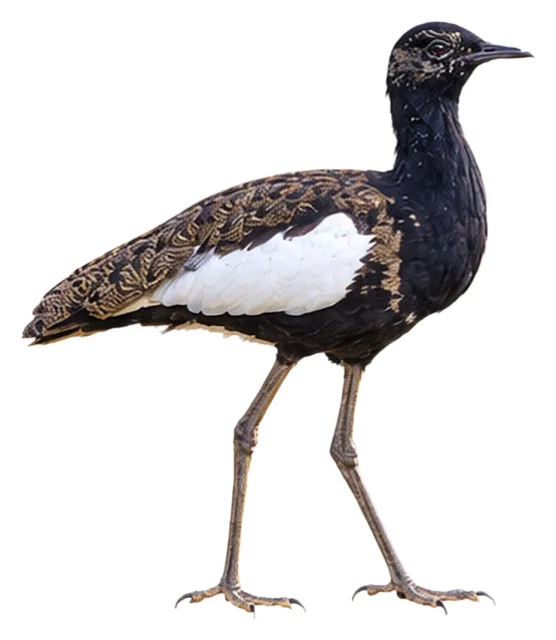 Bengal FloricanHoubaropsis bengalensis
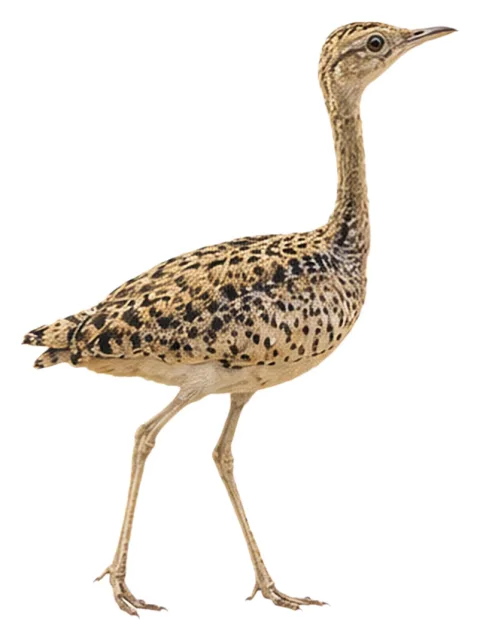 Lesser FloricanSypheotides indicus
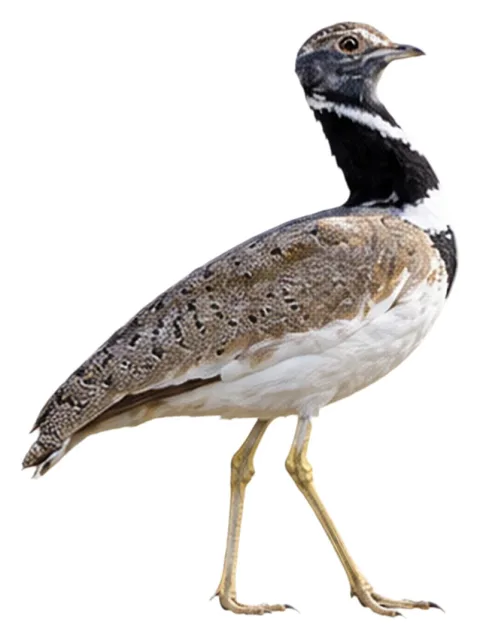 Little BustardTetrax tetrax