BIRDGACHA / FIELD NOTES
Unclassified birds
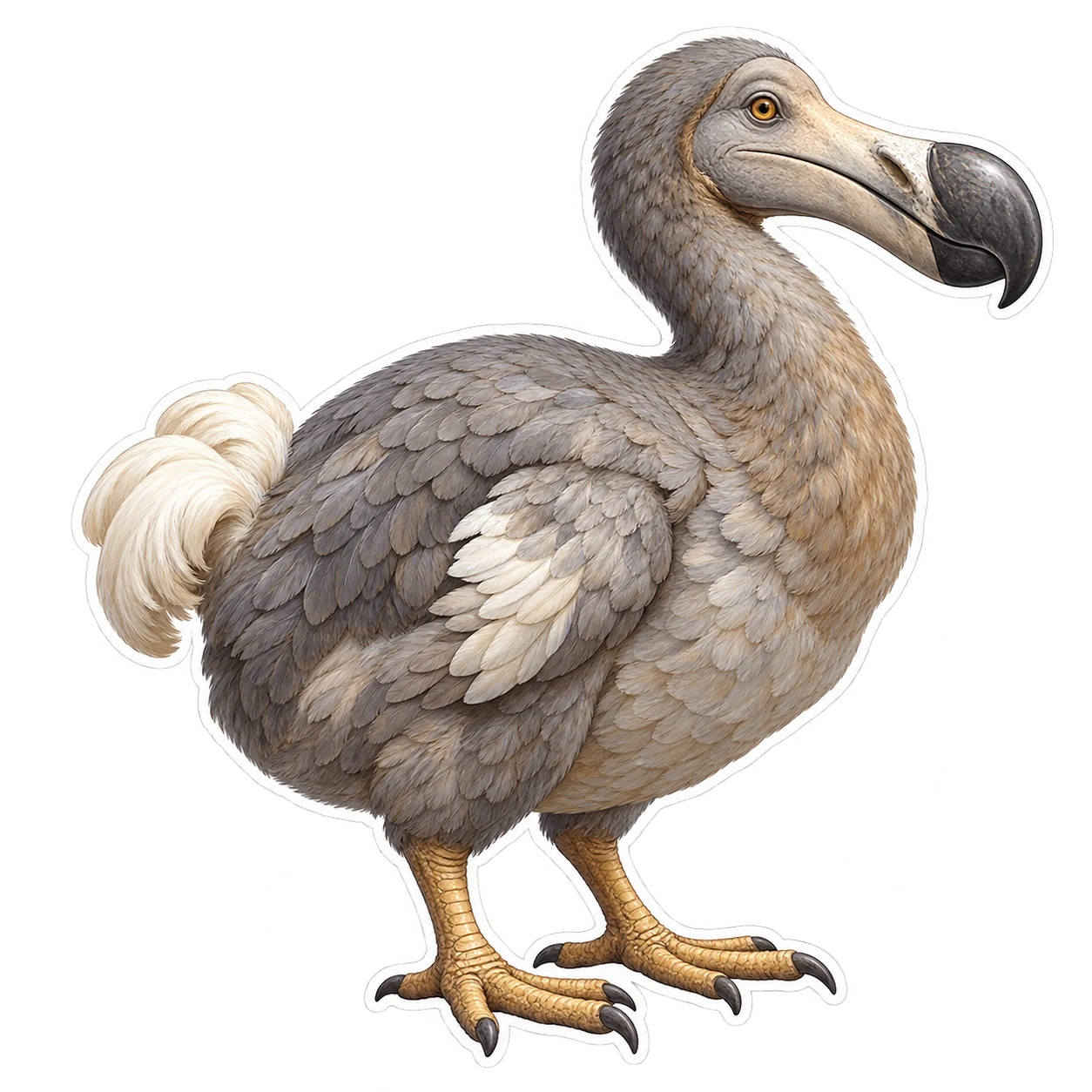
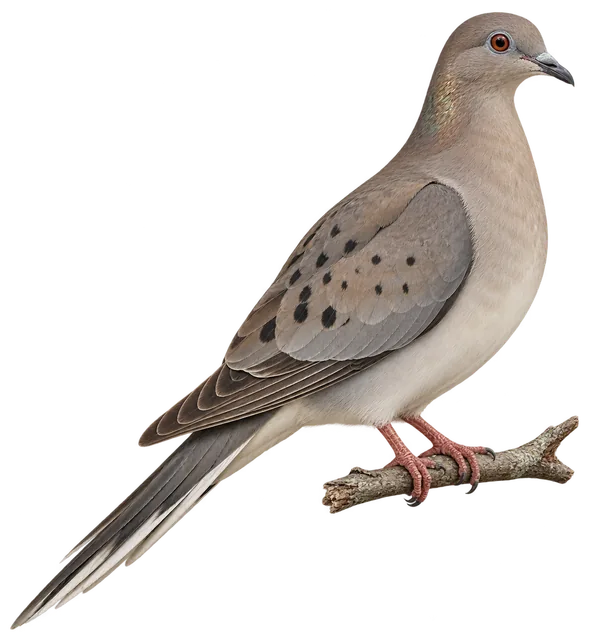
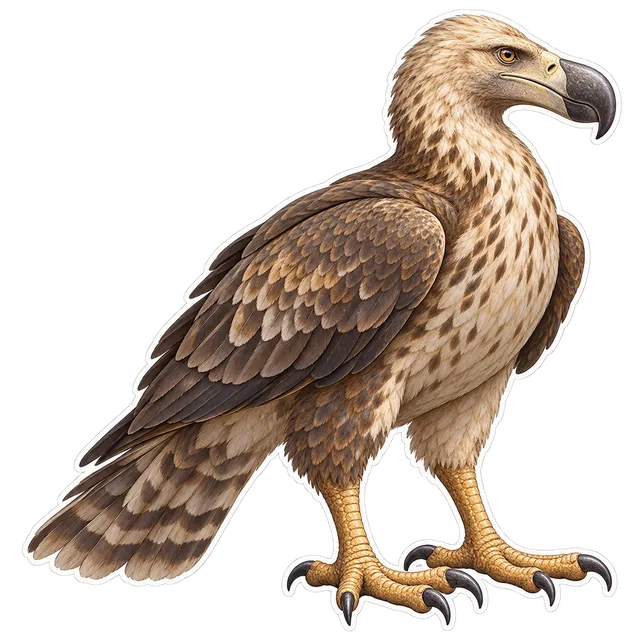
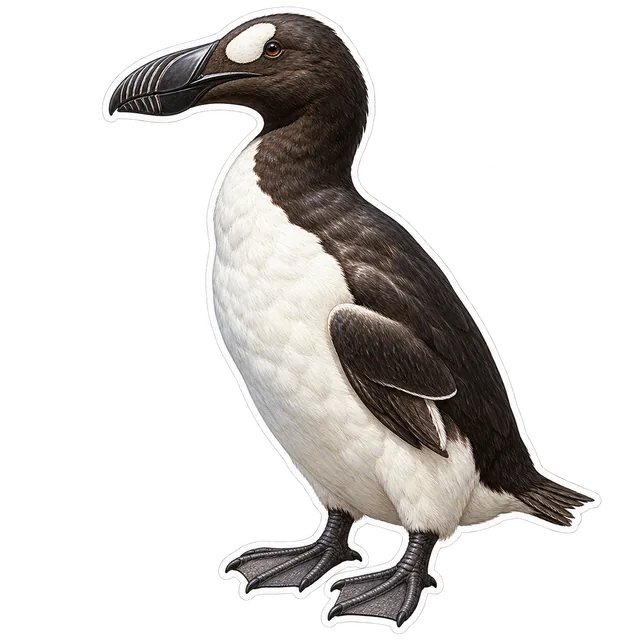
This is a catalogue holding group, not a biological family. It brings together four extinct birds whose special cards have not been assigned to a family in this catalogue: the Dodo (Raphus cucullatus), Passenger Pigeon (Ectopistes migratorius), Haast's Eagle (Hieraaetus moorei) and Great Auk (Pinguinus impennis). These birds differ profoundly in anatomy, food and former distribution. The Dodo was a flightless island pigeon, the Passenger Pigeon a flying North American pigeon, Haast's Eagle a large New Zealand raptor, and the Great Auk a flightless North Atlantic seabird. Compare their individual accounts rather than treating the shared directory as evidence of evolutionary relationship.
How to recognize Unclassified birds
- Treat this directory as an editorial holding group, not a taxonomic identification.
- Separate the Dodo and Passenger Pigeon from the eagle and the auk.
- Compare reconstructions with specimen-based accounts; these birds cannot be encountered alive.
- Check former region and historical habitat in the individual species account.
Where they live
The four birds occupied unrelated regions and habitats before extinction. The Dodo lived on Mauritius, the Passenger Pigeon ranged across North American forests, Haast's Eagle lived in New Zealand, and the Great Auk bred on rocky North Atlantic islands while feeding at sea. These historical ranges must not be combined into a single family distribution. The linked accounts provide the appropriate context for each bird, and a modern observation map should not be interpreted as evidence of surviving wild populations.
Species accounts: Dodo · Passenger Pigeon · Haast's Eagle · Great Auk
Sources — natural history: Oxford University Museum of Natural History: Dodo · New Zealand Birds Online: Haast's Eagle · Smithsonian Institution: Passenger Pigeon · Natural History Museum: Great Auk.
Updated 2026-11-06. Species counts follow this site's catalogue. This is an editorial summary, not an expert peer review.
Species records retain their original English, Chinese and scientific names.
4 results · page 1 of 1