Great Tit
Great Tit · BirdGacha
Great Tit
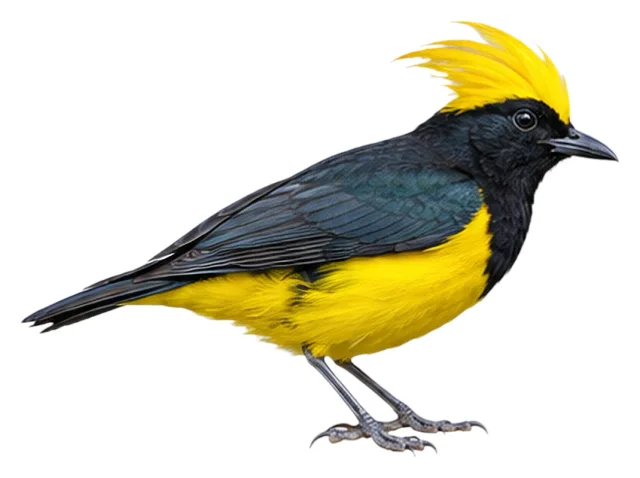
Parus majorA lively woodland and garden bird with a black head, pale cheeks and a yellow breast.
7124 / 11068
Illustration · not to scale
- Body Mass
- 16.3 g
- Wingspan
- 23 cm
- Diet
- Invertebrates
- Migration
- Resident
⚔️ Ecological Combat Rationale
Ecomorphologically adapted beak and agile strike momentum tailored to its foraging competition niche (ATK 48).
Lightweight agility and protective plumage camouflage favoring rapid evasive maneuverability over raw armor (DEF 38).
* These descriptions interpret game abilities, not measured physical strength. Generated scores use body mass, rarity and balancing rules; legacy cards retain manual values.
How to identify
Start with the black head, pale cheeks and yellow-green plumage rather than size alone.
Similar species
Species-specific comparison notes are not yet available. Related birds below are not necessarily lookalikes.
Calls & songs
Marie-Lan Taÿ Pamart · Sources & credits
🌍 Range & Habitat
16 · Subspecies & regional ranges
- Parus major newtoni
British Isles
- Parus major major
mainland Europe to w, sc Siberia, the Caucasus and Asia Minor
- Parus major kapustini
se Kazakhstan and nw China to Mongolia and e Siberia
- Parus major corsus
Portugal, s Spain and Corsica
- Parus major mallorcae
Balearic Is.
- Parus major excelsus
nw Africa
- Parus major ecki
Sardinia
- Parus major aphrodite
s Italy, s Greece, the Aegean Is. and Cyprus
- Parus major niethammeri
Crete
- Parus major terraesanctae
Syria to ne Egypt
- Parus major karelini
se Azerbaijan and nw Iran
- Parus major blanfordi
n Iraq, nc, sw Iran
- Parus major bokharensis
Turkmenistan and n Afghanistan to sc Kazakhstan and Uzbekistan
- Parus major turkestanicus
se Kazakhstan to sw Mongolia
- Parus major ferghanensis
Tajikistan and Kyrgyzstan to w China
- Parus major intermedius
ne Iran and sw Turkmenistan
Frequently asked questions
What is its scientific name?
Parus major
Which family does it belong to?
Tits, Chickadees (Paridae)
Where is it found?
Palearctic: Western & Central EurAsia and Northern Africa
Sources & credits
📖 Open Full Article on Wikipedia- IOC World Bird List 15.2 ↗
- AVONET ↗
- Bird illustration credits ↗ · huashu-bird-sticker · PolyForm-Shield-1.0.0
- Illustration reference ↗ · Frank Vassen from Brussels, Belgium · CC BY 2.0
Field identification notes
Great Tit identification: dark head, pale cheeks and repeated two-note song.
- Identification
- Start with the black head, pale cheeks and yellow-green plumage rather than size alone.
- Where to look
- Look in woodland and gardens; winter flocks may include other tit species.
- Comparison points
- Check each bird's head pattern in mixed flocks instead of assigning the entire flock one identity.
- Observation tip
- Match repeated two-note phrases to a visible bird and confirm with plumage.
Compare another species: Eurasian Blue Tit
Source checked 2026-11-02: RSPB · Great Tit. Regional observations in the source are not global population assessments.