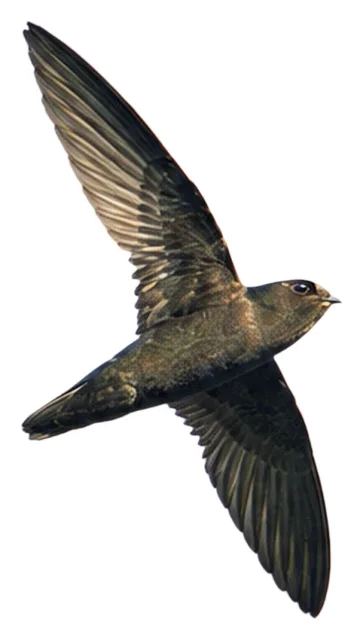
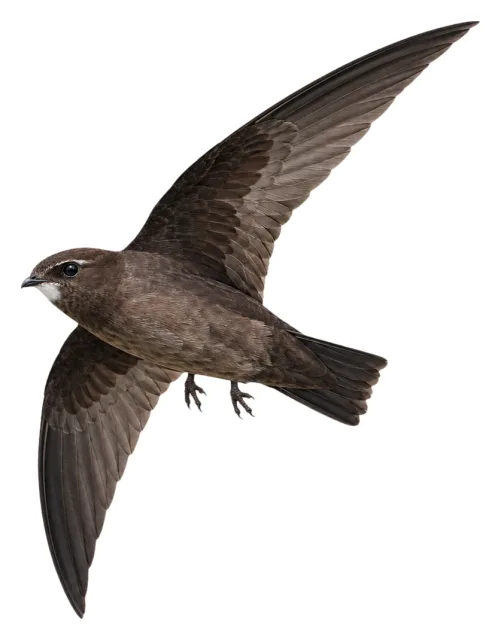
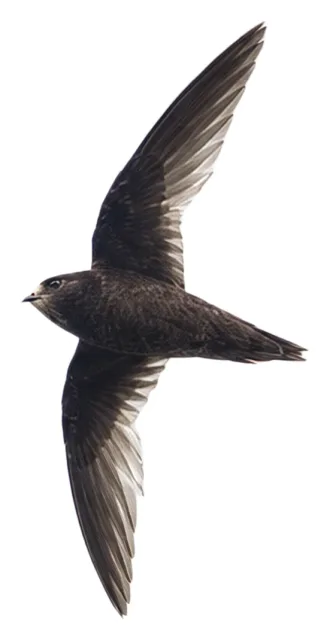
Pacific Swift
- Body length
- 17–18 cm
- Body Mass
- 39.4 g
- Wingspan
- 48.5 cm
- Diet
- Invertebrates
- Migration
- Partially migratory
⚔️ Ecological Combat Rationale
Ecomorphologically adapted beak and agile strike momentum tailored to its foraging competition niche (ATK 86).
Lightweight agility and protective plumage camouflage favoring rapid evasive maneuverability over raw armor (DEF 54).
* These descriptions interpret game abilities, not measured physical strength. Generated scores use body mass, rarity and balancing rules; legacy cards retain manual values.
How to identify
Detailed field marks are not yet available. Use the linked sources to confirm an identification.
Similar species
Species-specific comparison notes are not yet available. Related birds below are not necessarily lookalikes.
Calls & songs
A playable recording is not currently available for this species.
🌍 Range & Habitat
3 · Subspecies & regional ranges
- Apus pacificus pacificus
Siberia to Kamchatka (e Russia), n China and Japan to Amami Is. (s Japan)
- Apus pacificus kanoi
se Tibet to e China, Taiwan and far n Philippines
- Apus pacificus salimalii
e Tibetan Plateau and adjacent w Sichuan
Frequently asked questions
What is its scientific name?
Apus pacificus
Which family does it belong to?
Swifts (Apodidae)
Where is it found?
Palearctic: Central Siberia and Mongolia through Kamchatka (Southeastern Russia) and Japan & and Southern to Eastern Tibetan Plateau and adjacent Western Sichuan
Sources & credits
📖 Open Full Article on Wikipedia- IOC World Bird List 15.2 ↗
- AVONET ↗
- Body length: Wikipedia ↗
- Bird illustration credits ↗ · huashu-bird-sticker · PolyForm-Shield-1.0.0
- Illustration reference ↗ · Stuart Price from Hakodate, Japan · CC BY-SA 2.0