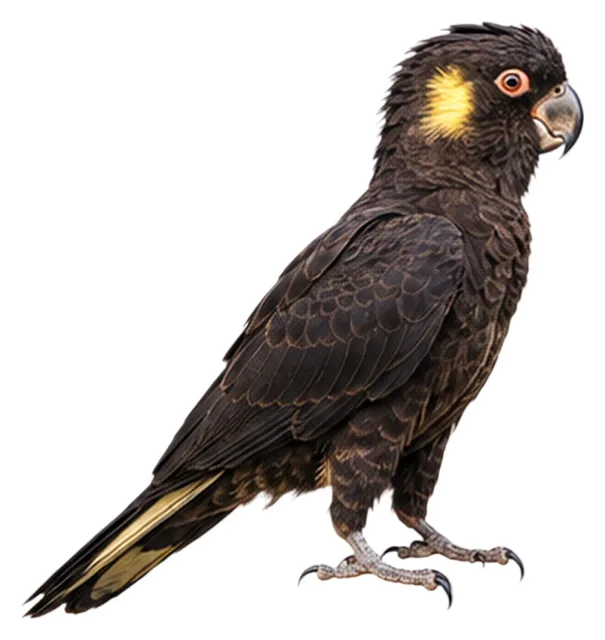
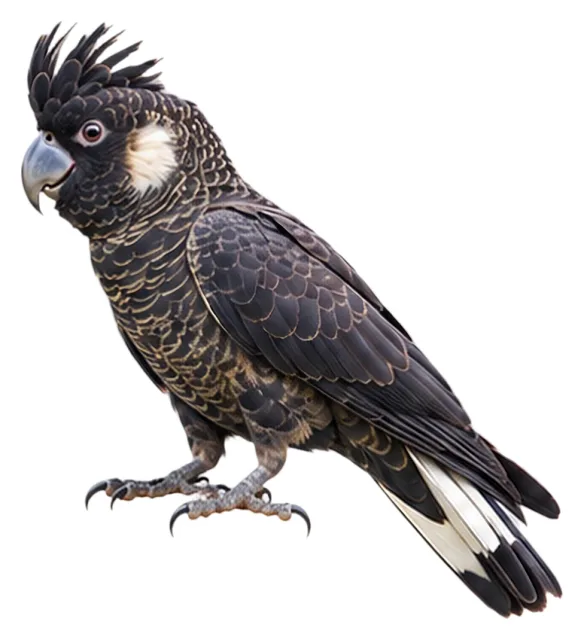
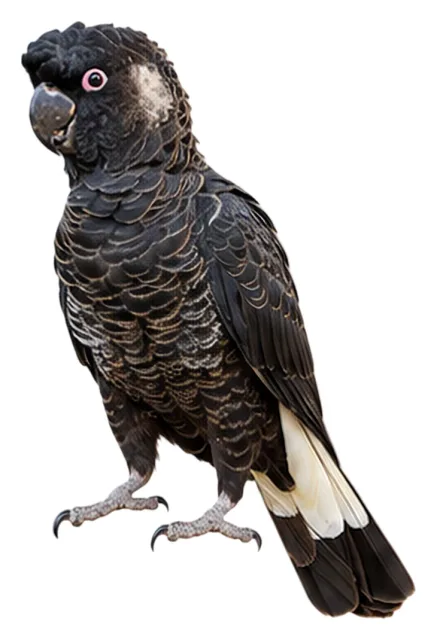
Palm Cockatoo
Palm Cockatoo · BirdGacha
3986 / 11068
Illustration · not to scale
- Body length
- 51–64 cm
- Body Mass
- 841 g
- Diet
- Omnivorous
- Migration
- Resident
⚔️ Ecological Combat Rationale
Ecomorphologically adapted beak and agile strike momentum tailored to its foraging competition niche (ATK 229).
Lightweight agility and protective plumage camouflage favoring rapid evasive maneuverability over raw armor (DEF 182).
* These descriptions interpret game abilities, not measured physical strength. Generated scores use body mass, rarity and balancing rules; legacy cards retain manual values.
How to identify
Detailed field marks are not yet available. Use the linked sources to confirm an identification.
Similar species
Species-specific comparison notes are not yet available. Related birds below are not necessarily lookalikes.
Calls & songs
A playable recording is not currently available for this species.
🌍 Range & Habitat
4 · Subspecies & regional ranges
- Probosciger aterrimus stenolophus
Yapen (Geelvink Bay is., nw New Guinea) and n, e New Guinea
- Probosciger aterrimus goliath
Raja Ampat Is. (nw of New Guinea), Bird's Head and Neck (nw New Guinea) and w, c, se New Guinea
- Probosciger aterrimus aterrimus
Aru Is. (sw of New Guinea)
- Probosciger aterrimus macgillivrayi
s New Guinea and n Cape York Pen., ne QLD (ne Australia)
Frequently asked questions
What is its scientific name?
Probosciger aterrimus
Which family does it belong to?
Cockatoos (Cacatuidae)
Where is it found?
Australasia: New Guinea and satellites & and far Northern Australia
Sources & credits
📖 Open Full Article on Wikipedia- IOC World Bird List 15.2 ↗
- AVONET ↗
- Body length: Wikipedia ↗
- Bird illustration credits ↗ · huashu-bird-sticker · PolyForm-Shield-1.0.0
- Illustration reference ↗ · Mark Simpson · CC BY-NC