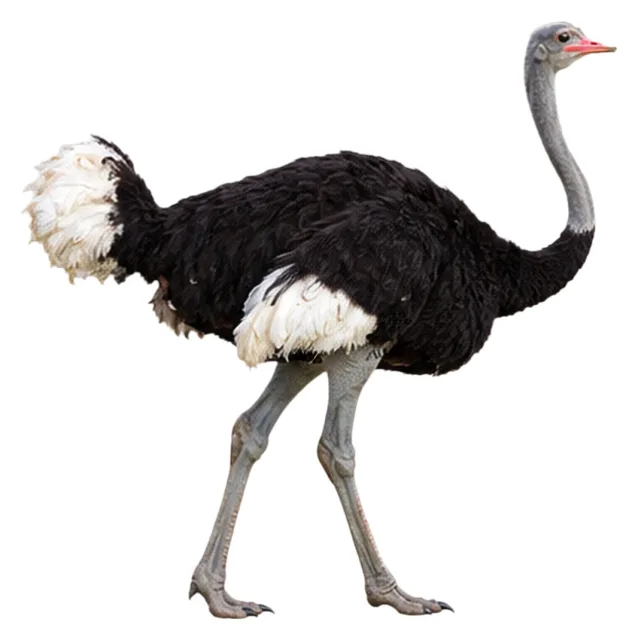
Autruche d’Afrique
Struthio camelus
Common Ostrich
⚔️ Analyse de Combat Écologique
ATQ
256
Robuste morphologie terrestre délivrant une puissance de frappe redoutable avec de puissantes serres (ATQ 256).
DÉF
990
Structure osseuse dense et masse corporelle imposante offrant une résilience physique remarquable face aux prédateurs (DÉF 990).
* Ces textes interprètent des capacités de jeu, pas une force physique mesurée. Les scores utilisent masse, rareté et équilibrage ; les cartes d’origine gardent leurs valeurs manuelles.
🌍 Répartition et Habitat
📚 Sources Scientifiques & Wikipédia
📖 Lire l'article complet sur Wikipédia1 / 11068
Chercher le chant sur Xeno-Canto
Struthio camelus
Field identification notes
Common Ostrich field notes: terrestrial build, adult plumage and open habitats.
- Identification
- Begin with its tall body, long neck and powerful legs; this flightless bird lives on the ground.
- Where to look
- Natural habitats include African savannas and the semi-arid Sahel.
- Comparison points
- Adult males are dark while females are generally brown; do not automatically treat that difference as another species.
- Observation tip
- Observe feeding and walking from a distance. Its legs are defensive weapons, so avoid approaching or cornering it.
Compare another species: Autruche de Somalie
Source checked 2026-11-02: The Maryland Zoo · Common Ostrich. Regional observations in the source are not global population assessments.