Feldsperling
Feldsperling · BirdGacha
Feldsperling
Passer montanusA small, lively sparrow with dark cheek patches, often seen hopping around rooftops and trees.
9582 / 11068
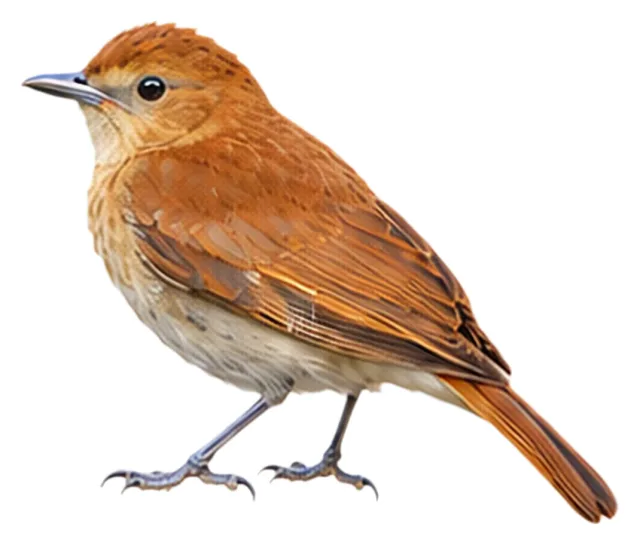
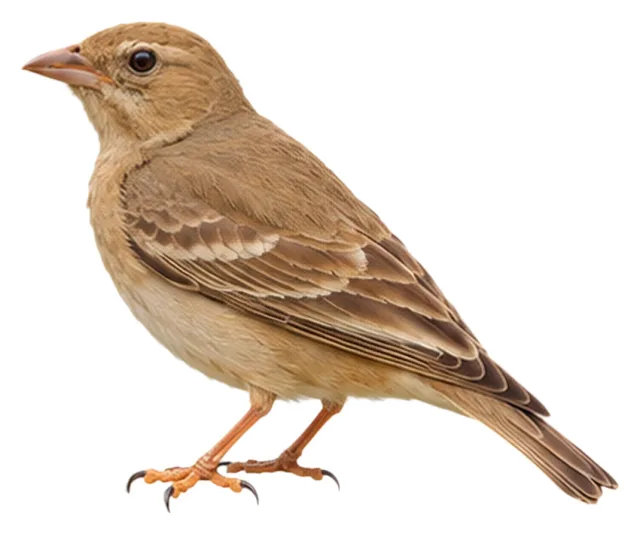
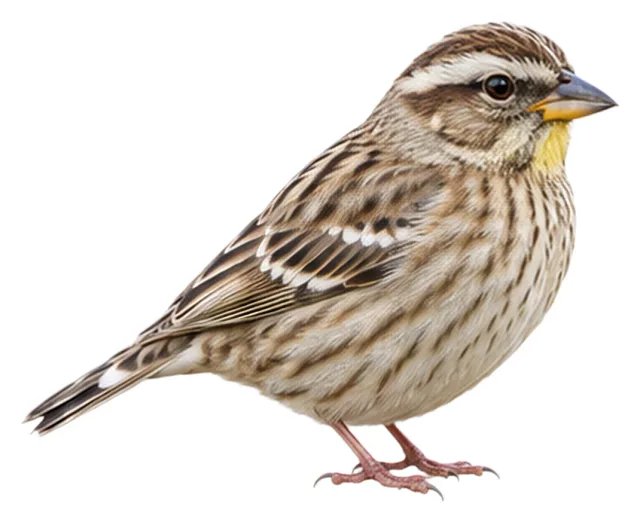
Illustration · nicht maßstabsgetreu
- Körperlänge
- 12.5–14 cm
- Körpergewicht
- 21.4 g
- Flügelspannweite
- 21 cm
- Nahrung
- Samen
- Zugverhalten
- Standvogel
⚔️ Ökologische Kampfkraft-Analyse
Ökomorphologisch angepasster Schnabel und wendige Stoßkraft, perfekt abgestimmt auf die Nahrungsnische (ANG 22).
Leichtgewichtige Agilität und Tarngefieder setzen auf schnelle Ausweichmanöver statt schwere Panzerung (VER 24).
* Die Texte erläutern Spielfähigkeiten, keine gemessene Körperkraft. Generierte Werte nutzen Körpermasse, Seltenheit und Balanceregeln; ursprüngliche Karten behalten manuelle Werte.
Erkennungsmerkmale
Check the chestnut crown, dark spot on each pale cheek and small dark bib.
Ähnliche Arten
Artspezifische Vergleiche fehlen noch. Verwandte Vögel sehen nicht zwingend ähnlich aus.
Rufe & Gesang
Sonothèque ADVL · Quellen & Nachweise
🌍 Verbreitung & Lebensraum
9 · Unterarten & Verbreitung
- Passer montanus montanus
Europe through n, c Asia to ne Siberia and ne Mongolia
- Passer montanus dybowskii
se Siberia, ne China and n Korea
- Passer montanus transcaucasicus
e Turkey, the Caucasus to Armenia and Iran
- Passer montanus kansuensis
nc China
- Passer montanus dilutus
s Kazakhstan and e Iran to nw China and s Mongolia
- Passer montanus tibetanus
Tibet to c China
- Passer montanus saturatus
Sakhalin and Kuril Is. and Japan through e China to Taiwan and n Philippines
- Passer montanus hepaticus
ne India (ne Arunachal Pradesh), se Tibet and nw Myanmar
- Passer montanus malaccensis
w Nepal to Bhutan and ne India (Assam), s China, se Asia, Indonesian Arch. and s Philippines
Häufige Fragen
Wie lautet der wissenschaftliche Name?
Passer montanus
Zu welcher Familie gehört die Art?
Old World Sparrows, Snowfinches (Passeridae)
Wo kommt sie vor?
Palearctic & Oriental: subarctic to tropics of Palearctic and Oriental regions in farms & parks & cities: British Isles & Southern Scandinavia & Southeastern Murmansk Eastern to Southern Chukotka & Kamchatka & and Commander Is. (Northwestern to Northeastern Russia) & in Southern to Iberian Pen. & Gran Canaria (Central Canary Is. & Macaronesia & Western of Northern Africa) & Mediterranean is. through Turkey & Northern Iran & South-central Pakistan & Tibet & Central & Eastern Himalayas through Southeastern Asia & Eastern Asian is. from Kuril Is. & all Japan & Taiwan & all Philippines and Indonesian Arch.; introduced many other places
Quellen & Nachweise
📖 Vollständigen Wikipedia-Artikel lesen- IOC World Bird List 15.2 ↗
- AVONET ↗
- Körperlänge: Wikipedia ↗
- Illustrationsnachweis ↗ · huashu-bird-sticker · PolyForm-Shield-1.0.0
- Illustrationsvorlage ↗ · Laitche · Public domain
Field identification notes
Tree Sparrow or House Sparrow? Start with the crown and cheek patch.
- Identification
- Check the chestnut crown, dark spot on each pale cheek and small dark bib.
- Where to look
- The source describes rural UK birds; association with buildings varies by region, so use local records.
- Comparison points
- Compare the cheek spots and crown with House Sparrow; male and female Tree Sparrows look alike.
- Observation tip
- Confirm facial marks through binoculars before recording the flock and setting.
Compare another species: Haussperling
Source checked 2026-11-02: RSPB · Eurasian Tree Sparrow. Regional observations in the source are not global population assessments.