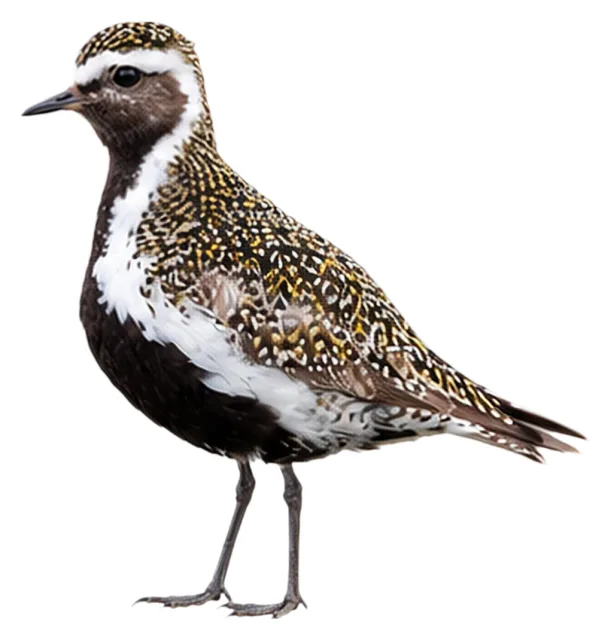
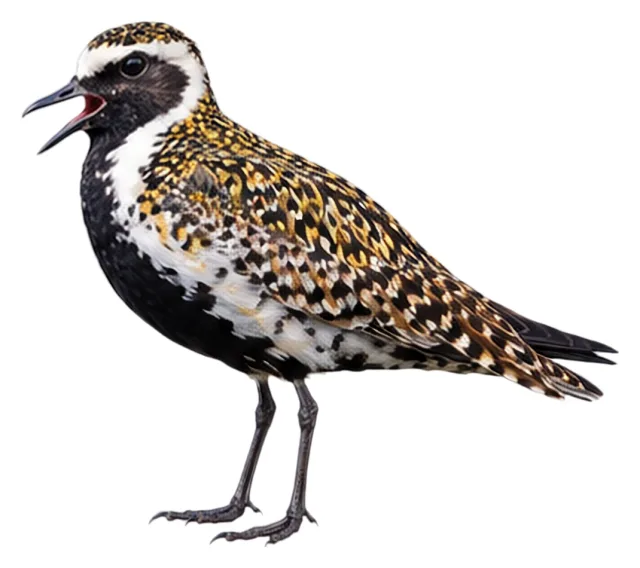
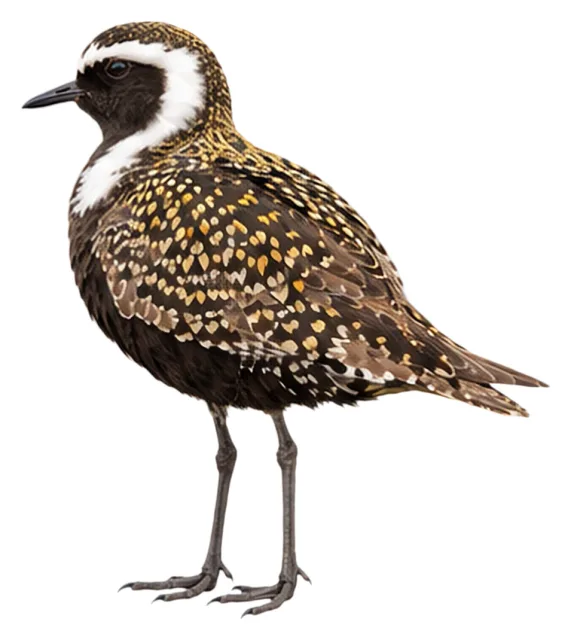
Grey Plover
Grey Plover · BirdGacha
1950 / 11068
Illustration · not to scale
- Body length
- 27–30 cm
- Body Mass
- 250 g
- Wingspan
- 77 cm
- Diet
- Aquatic prey
- Migration
- Migratory
⚔️ Ecological Combat Rationale
Ecomorphologically adapted beak and agile strike momentum tailored to its foraging competition niche (ATK 276).
Lightweight agility and protective plumage camouflage favoring rapid evasive maneuverability over raw armor (DEF 182).
* These descriptions interpret game abilities, not measured physical strength. Generated scores use body mass, rarity and balancing rules; legacy cards retain manual values.
How to identify
Detailed field marks are not yet available. Use the linked sources to confirm an identification.
Similar species
Species-specific comparison notes are not yet available. Related birds below are not necessarily lookalikes.
Calls & songs
Sonothèque ADVL · Sources & credits
🌍 Range & Habitat
3 · Subspecies & regional ranges
- Pluvialis squatarola squatarola
high Arctic coasts from nw Russia to Chukotskiy Pen. (including New Siberian Is., n of ec Siberia) and w, n Alaska
- Pluvialis squatarola tomkovichi
Wrangel I. (n of ne Siberia)
- Pluvialis squatarola cynosurae
nc to ne high Arctic Canada coast and is. to Baffin I. (except Ellesmere and satellites)
Frequently asked questions
What is its scientific name?
Pluvialis squatarola
Which family does it belong to?
Plovers (Charadriidae)
Where is it found?
North America & Palearctic: high (locally low) Arctic coasts and is. (except Ellesmere I. & Greenland & Scandinavia and is. from Svalbard to Severnaya Zemlya)
Sources & credits
📖 Open Full Article on Wikipedia- IOC World Bird List 15.2 ↗
- AVONET ↗
- Body length: Wikipedia ↗
- Bird illustration credits ↗ · huashu-bird-sticker · PolyForm-Shield-1.0.0
- Illustration reference ↗ · Chuck Homler, Focus On Wildlife · CC BY-SA 4.0