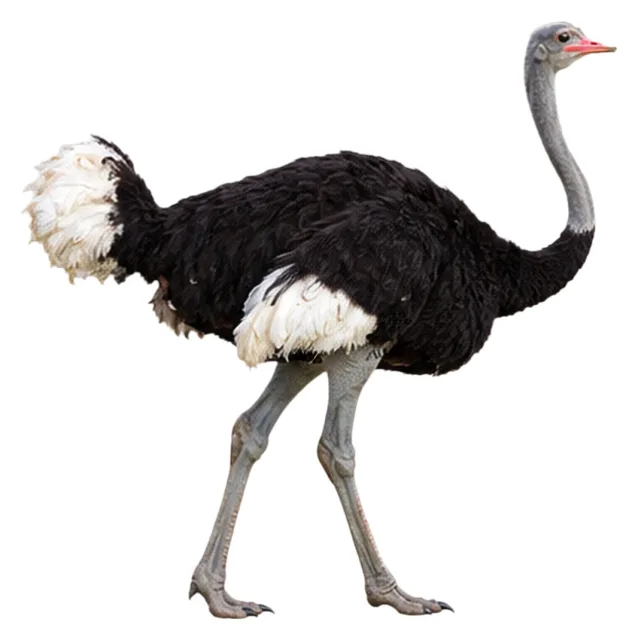
Avestruz común
Avestruz común · BirdGacha
1 / 11068
Ilustración · no a escala
- Masa Corporal
- 111 kg
- Dieta
- Omnívora
- Migración
- Residente
⚔️ Análisis de Combate Ecológico
Complexión terrestre pesada que genera una tremenda fuerza de patada con garras robustas, asestando impactos devastadores (ATQ 256).
Densa estructura esquelética y gran masa corporal que ofrecen una formidable resistencia física contra los depredadores (DEF 990).
* Estas descripciones interpretan habilidades del juego, no fuerza física medida. Las puntuaciones usan masa, rareza y reglas de equilibrio; las cartas originales conservan valores manuales.
Cómo identificarla
Begin with its tall body, long neck and powerful legs; this flightless bird lives on the ground.
Especies similares
Aún no hay comparaciones específicas. Las aves relacionadas no son necesariamente similares.
Cantos y llamadas
No hay una grabación disponible para esta especie.
🌍 Distribución y Hábitat
4 · Subespecies y distribución
- Struthio camelus syriacus · Extinta
Syrian and Arabian deserts
- Struthio camelus camelus
s Morocco and Mauritania to s Egypt, Eritrea and n, w Ethiopia, s to Cameroon and n Uganda
- Struthio camelus massaicus
s Kenya and c Tanzania
- Struthio camelus australis
s Africa
Preguntas frecuentes
¿Cuál es su nombre científico?
Struthio camelus
¿A qué familia pertenece?
Ostriches (Struthionidae)
¿Dónde se encuentra?
Africa: Western & Central & Eastern & Southwestern
Fuentes y créditos
📖 Ver Artículo Completo en Wikipedia- IOC World Bird List 15.2 ↗
- AVONET ↗
- Créditos de la ilustración ↗ · huashu-bird-sticker · PolyForm-Shield-1.0.0
- Referencia de la ilustración ↗ · tlim · Not recorded
Field identification notes
Common Ostrich field notes: terrestrial build, adult plumage and open habitats.
- Identification
- Begin with its tall body, long neck and powerful legs; this flightless bird lives on the ground.
- Where to look
- Natural habitats include African savannas and the semi-arid Sahel.
- Comparison points
- Adult males are dark while females are generally brown; do not automatically treat that difference as another species.
- Observation tip
- Observe feeding and walking from a distance. Its legs are defensive weapons, so avoid approaching or cornering it.
Compare another species: Avestruz somalí
Source checked 2026-11-02: The Maryland Zoo · Common Ostrich. Regional observations in the source are not global population assessments.