BIRDGACHA / FIELD NOTES
Ostriches
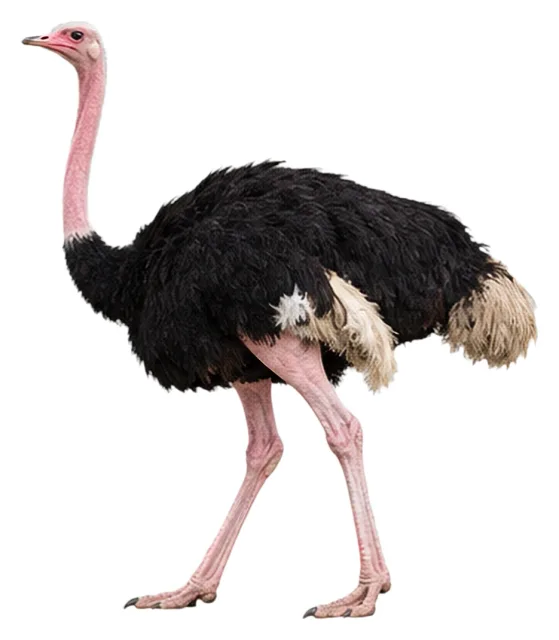
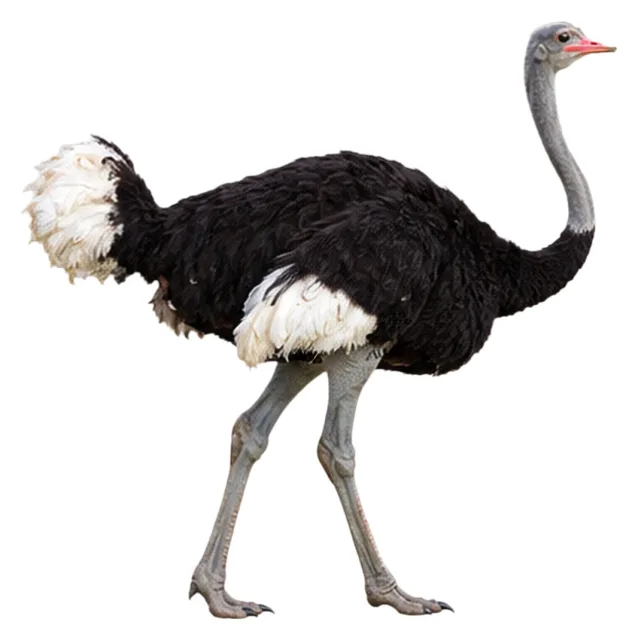
Ostriches are enormous flightless birds with long bare necks, powerful running legs and two toes on each foot. Adult males generally contrast dark bodies with pale wing and tail feathers, while females are browner or greyer. The two species in this catalogue are Common Ostrich (Struthio camelus) and Somali Ostrich (Struthio molybdophanes). They eat plant material and also take some small animal food. Wings are used in display and manoeuvring rather than flight. The Common and Somali Ostriches differ in exposed skin and other details, so the familiar outline of a farmed ostrich should not erase distinctions between the two wild species.
How to recognize Ostriches
- Bill: broad flattened bills.
- Outline: huge bodies with long bare necks and two-toed legs.
- Feeding: walking and running while taking plants and small animals.
Where they live
African open landscapes provide the native range, including savanna, dry grassland and semi-desert. The two species occupy different regional distributions, with conditions varying from wooded plains to much drier country. Access to suitable food and open ground influences movements. Farmed and introduced birds elsewhere should be distinguished from native populations, especially when a photograph or occurrence record comes from a setting that does not represent the wild habitat.
Species accounts: Common Ostrich · Somali Ostrich
Sources — natural history: Wikipedia: Ostriches natural history · Cornell Birds of the World: Common Ostrich species account · Don Roberson: Ostriches field observations and natural history.
Classification: IOC World Bird List: family names and classification.
Some Cornell Birds of the World account sections require a subscription.
Updated 2026-11-06. Species counts follow this site's catalogue. This is an editorial summary, not an expert peer review.
Species records retain their original English, Chinese and scientific names.
2 results · page 1 of 1